A perfect drive through Smoky Mountains requires strategic planning, especially with over 12 million visitors annually exploring this scenic wonderland. Success hinges on timing your route for early morning starts, knowing prime wildlife viewing locations like Cades Cove, checking weather conditions for potential road closures, and leveraging golden hour lighting for photography. These mountains offer some of America’s most breathtaking scenic drives, but the difference between a magical journey and a traffic-filled disappointment lies in preparation.
TL;DR: Essential Drive Through Smoky Mountains Tips
- Plan your route strategically: Start early morning to avoid crowds and secure parking at popular overlooks
- Best routes: Newfound Gap Road (US-441) for high-elevation vistas, Cades Cove Loop for wildlife, Roaring Fork for intimate forest drives
- Prime timing: Early morning (before 9 AM) and late afternoon golden hour for best lighting and fewer crowds
- Wildlife viewing: Cades Cove at dawn and dusk offers highest black bear and deer sighting opportunities
- Weather awareness: Check road conditions as mountain weather can close routes unexpectedly
- Home base recommendation: Stay at properties near park entrances for easy access to scenic drives
Whether you’re chasing waterfalls along rushing streams, searching for black bears in meadows, or capturing the layered blue ridges that gave these mountains their name, the right approach transforms an ordinary road trip into an extraordinary mountain adventure. The key lies in understanding the rhythm of the Smokies and positioning yourself for success.
What Are the Best Routes for Your Drive Through Smoky Mountains?
The route you choose directly shapes your mountain driving experience. Each scenic byway offers distinct landscapes, wildlife opportunities, and photographic moments that cater to different interests and timeframes.
Newfound Gap Road (US-441) serves as the park’s main artery, stretching 31 miles from Gatlinburg to Cherokee. This route climbs to 5,046 feet at Newfound Gap, offering breathtaking high-elevation panoramas of endless mountain ridges. The road provides access to Clingmans Dome, the park’s highest peak at 6,643 feet, where a half-mile paved trail leads to an observation tower with 360-degree views.
For wildlife enthusiasts, Cades Cove Loop Road presents an 11-mile, one-way journey through a preserved mountain valley. This route showcases 19th-century log cabins, churches, and gristmills while providing the park’s best opportunities for spotting black bears, white-tailed deer, and wild turkeys. The loop typically takes 2-4 hours depending on wildlife activity and traffic.
Roaring Fork Motor Nature Trail offers a quieter alternative, winding 5.5 miles through old-growth forest and past historic log buildings. This narrow, one-way road follows a rushing mountain stream and provides access to several waterfalls, including the popular Rainbow Falls trailhead.
{{IMAGE: Winding mountain road through autumn forest with layers of blue ridges in the distance, golden morning light | Scenic drive through Smoky Mountains autumn foliage}}
The Blue Ridge Parkway extends your drive beyond park boundaries, connecting to North Carolina’s high country. While technically outside the national park, this route offers some of the most spectacular mountain vistas in the region, particularly during fall foliage season from late September through mid-October.
When Is the Best Time to Start Your Mountain Drive?
Timing your drive through Smoky Mountains can mean the difference between a peaceful journey and a frustrating crawl through traffic. Park visitation patterns follow predictable rhythms that smart travelers can use to their advantage.
Early morning departure between 6-9 AM offers multiple advantages. Wildlife is most active during dawn hours, parking spaces remain available at popular overlooks, and the soft morning light creates ideal conditions for photography. Black bears emerge to forage in meadows, while morning mist often clings to valleys, creating ethereal mountain scenes.
Peak congestion occurs between 10 AM and 4 PM, especially on weekends and during fall foliage season (late September through October). Cades Cove Loop can back up for miles during these hours, turning what should be a 2-hour drive into a 4-5 hour ordeal.
Golden hour driving from 4-7 PM provides spectacular lighting for mountain photography. The low-angle sunlight illuminates ridges and creates dramatic shadows in valleys. However, this timing coincides with increased wildlife activity, requiring extra caution on mountain roads.
Seasonal considerations significantly impact your experience. Fall foliage season from late September through mid-October brings peak colors but also peak crowds. Spring offers wildflower blooms but unpredictable weather. Summer provides the most reliable driving conditions but the heaviest traffic.
Where Should You Stop for Wildlife Viewing?
Strategic wildlife viewing transforms a simple drive into an unforgettable encounter with Smoky Mountain residents. Knowing where animals congregate and when they’re most active dramatically increases your chances of memorable sightings.
Cades Cove remains the park’s premier wildlife viewing destination. The 11-mile loop road traverses open meadows where black bears forage for berries and grasses. Early morning and late afternoon offer optimal viewing opportunities when bears are most active. White-tailed deer frequently graze in the fields, while wild turkeys strut through the grasslands.
The Cataloochee Valley in North Carolina hosts the park’s elk population, reintroduced in 2001. These magnificent animals, weighing up to 700 pounds, are best viewed during dawn and dusk hours when they emerge from forest cover to graze in open meadows.
Newfound Gap Road between Gatlinburg and the gap itself frequently produces bear sightings, particularly near the Chimney Tops Picnic Area and Newfound Gap overlook. Bears often forage along roadside areas, especially during berry season from late summer through early fall.
{{IMAGE: Black bear grazing in mountain meadow with misty forest backdrop, early morning light | Wildlife viewing opportunities during Smoky Mountain drives}}
Safety protocols are essential for wildlife encounters. Maintain at least 50 yards from bears and elk, never feed wild animals, and keep car doors closed while observing from vehicles. Bears can run 30 mph and climb trees faster than humans, making distance your primary protection.
How Do You Capture the Best Photos During Your Drive?
Photography transforms fleeting mountain moments into lasting memories, but success requires understanding light conditions, composition techniques, and the unique challenges of roadside shooting in the Smokies.
Golden hour lighting occurs twice daily, providing the warm, soft illumination that makes mountain landscapes glow. Morning golden hour typically runs from sunrise until 8-9 AM, while evening golden hour begins 1-2 hours before sunset. These periods create the dramatic side-lighting that emphasizes ridge lines and valley depths.
The famous blue-hued atmosphere that gives the Smokies their name appears most pronounced during clear morning conditions. This natural phenomenon results from moisture and plant emissions creating a distinctive haze that filters light, producing the characteristic blue tint visible from elevated viewpoints.
Composition techniques for mountain photography include using foreground elements like wildflowers or rocks to create depth, positioning ridgelines along the rule-of-thirds grid, and including sky elements to balance earthbound features. Vertical compositions work well for waterfalls, while horizontal formats suit expansive valley views.
Essential shooting locations include Clingmans Dome for sunrise panoramas, Morton Overlook on Newfound Gap Road for classic layered ridge shots, and various pullouts along the Blue Ridge Parkway for both intimate forest scenes and grand vistas.
Weather considerations significantly impact photography opportunities. Overcast skies provide even lighting for forest and waterfall photography, while partly cloudy conditions create dramatic interplay between light and shadow across mountain faces.
What Should You Know About Mountain Weather and Road Conditions?
Mountain weather changes rapidly in the Smokies, with conditions varying dramatically by elevation and season. Understanding these patterns helps you plan safer, more enjoyable drives while avoiding unexpected closures or hazardous conditions.
Elevation-based weather variations mean temperatures can differ by 10-20 degrees between Gatlinburg (1,289 feet) and Clingmans Dome (6,643 feet). Snow may coat high elevations while valleys remain clear, creating potentially treacherous driving conditions on upper mountain roads.
The National Park Service website provides current road closure information, essential during winter months when ice and snow can close Clingmans Dome Road and other high-elevation routes. Newfound Gap Road remains open year-round but may require chains during severe weather.
Fog and visibility challenges frequently impact mountain driving, especially during temperature inversions when warm air traps cool air in valleys. These conditions can reduce visibility to mere feet, making driving extremely hazardous. Early morning drives often encounter fog that typically burns off by mid-morning.
Seasonal driving considerations vary significantly. Spring brings unpredictable weather with possible late snowstorms above 4,000 feet. Summer offers the most stable conditions but afternoon thunderstorms can develop quickly. Fall provides excellent driving weather but increased traffic. Winter requires the most caution with icy conditions above 3,000 feet.
How Do You Avoid Crowds While Driving Through the Smokies?
Strategic crowd avoidance transforms a potentially frustrating drive into a peaceful mountain experience. Understanding visitation patterns and choosing alternative routes or timing helps you discover the Smokies’ serene side even during busy seasons.
Off-peak timing provides the most effective crowd avoidance strategy. Tuesday through Thursday generally see lower visitation than weekends, while early morning hours before 9 AM offer the most solitude. Late afternoon drives after 5 PM also encounter fewer vehicles as day visitors head home.
Alternative routes bypass the most congested areas while still providing spectacular mountain scenery. Rich Mountain Road offers a challenging but rewarding gravel route to Cades Cove’s backside, avoiding the main loop entirely. The Tremont Road leads to less-visited waterfalls and hiking trails in the park’s middle section.
Seasonal crowd patterns follow predictable schedules. Fall foliage season from late September through October brings peak visitation, while January and February offer the most solitude. Spring break weeks in March see increased traffic, while summer crowds peak during July and August.
{{IMAGE: Empty winding mountain road at sunrise with forest on both sides, peaceful morning mist | Quiet scenic drive through Smoky Mountains early morning}}
Parking strategies make or break popular destination visits. Arrive at major overlooks like Clingmans Dome or Laurel Falls before 8 AM to secure spaces. Consider hiking lesser-known trails accessible from scenic drives for solitude combined with natural beauty.
Which Cabin Locations Offer the Best Access to Scenic Drives?
Your accommodation choice dramatically impacts your scenic driving experience, with proximity to park entrances and major routes determining how much time you spend on the road versus enjoying mountain vistas.
Smoky Mountain Serenity Lodge provides an ideal starting point just 3.5 miles from Great Smoky Mountains National Park. This luxury retreat features a rooftop terrace with panoramic forest views and dual outdoor fireplaces, perfect for planning your next day’s route while soaking in the hot tub.
Sevierville locations offer quick access to the park’s less congested eastern entrances. Forest Creek Retreat sits just 6.5 miles from the national park, providing a peaceful creek-side sanctuary where the gentle water sounds complement your mountain driving adventures.
Properties near Gatlinburg provide direct access to Newfound Gap Road and the park’s main visitor facilities. The Spirit Bear in the Arts & Crafts Community places you just 2.1 miles from the park entrance, allowing quick morning departures for optimal wildlife viewing times.
Strategic location benefits extend beyond drive time savings. Mountain properties often provide elevated viewpoints for sunrise viewing without leaving your cabin, weather monitoring capabilities from covered decks, and immediate access to alternative routes when main roads become congested.
What Are the Must-Stop Overlooks and Photo Points?
Strategic stops transform a drive into a comprehensive Smoky Mountain experience, with carefully chosen overlooks providing the iconic views that define these ancient peaks.
Clingmans Dome offers the park’s highest accessible viewpoint at 6,643 feet. The half-mile paved trail leads to an observation tower with 360-degree panoramas encompassing seven states on clear days. Early morning visits often find the tower above cloud level, creating dramatic shots of mist-filled valleys below.
Morton Overlook on Newfound Gap Road provides the classic layered ridge photograph that appears in countless Smoky Mountain publications. This easily accessible pullout offers westward views across multiple mountain ranges, particularly stunning during golden hour lighting.
Newfound Gap itself marks the Tennessee-North Carolina border at 5,046 feet elevation. The large parking area and visitor facilities make this a popular stop, but the views justify the crowds. A short walk along the Appalachian Trail provides additional vantage points.
Campbell Overlook on Newfound Gap Road delivers spectacular valley views with Gatlinburg visible far below. This spot works particularly well for sunset photography when the town’s lights begin twinkling in the gathering darkness.
Blue Ridge Parkway overlooks extend your scenic drive beyond park boundaries. Waterrock Knob offers some of the highest elevation views in the region, while the various pullouts along this scenic highway provide countless photographic opportunities.
How Do You Plan Multi-Day Scenic Driving Adventures?
Extended scenic driving adventures allow deeper exploration of the Smokies’ diverse landscapes while avoiding the rushed pace that single-day trips often require.
Day one should focus on the park’s main attractions: Newfound Gap Road to Clingmans Dome, with stops at key overlooks and short nature walks. This orientation day familiarizes you with major routes and helps identify areas deserving return visits.
Day two typically centers on Cades Cove Loop Road, ideally starting before sunrise for optimal wildlife viewing. The historical buildings and mountain meadows provide a completely different experience from the high-elevation drives, requiring a full day for proper exploration.
Subsequent days can explore alternative routes like Roaring Fork Motor Nature Trail, Rich Mountain Road, or ventures onto the Blue Ridge Parkway. Each route offers unique character, from intimate forest drives to expansive ridgeline panoramas.
Base camp strategies involve choosing accommodations that provide easy access to multiple driving routes. Properties like Views Fore Days offer luxury amenities including an indoor heated pool and home theater, perfect for relaxing between driving days while maintaining excitement for the next adventure.
What Safety Considerations Matter for Mountain Driving?
Mountain driving presents unique challenges that require specific preparation and awareness to ensure safe, enjoyable experiences throughout your Smoky Mountain adventure.
Vehicle preparation includes checking brake fluid levels, as mountain descents place significant demands on braking systems. Tire condition becomes critical on winding mountain roads, while a full gas tank prevents fuel anxiety on remote routes where services may be limited.
Wildlife encounter protocols require specific responses for safe animal observations. Never approach bears or elk closer than 50 yards, keep windows partially closed to prevent animals from entering vehicles, and never feed wildlife despite temptation. Animals that become food-conditioned often require relocation or euthanization.
Weather-related hazards change rapidly in mountain environments. Fog can reduce visibility to dangerous levels within minutes, while afternoon thunderstorms develop quickly during summer months. Ice forms on high-elevation roads even when valleys remain clear, creating treacherous driving conditions.
Emergency preparedness should include cell phone chargers, basic first aid supplies, water, and snacks. Cell coverage remains spotty in many mountain areas, making preparation essential for unexpected situations.
Navigation backup plans help when GPS signals weaken in mountain terrain. Paper maps or downloaded offline maps provide alternatives when electronic navigation fails, particularly important on lesser-traveled routes.
Frequently Asked Questions
What’s the best time of year for driving through Smoky Mountains?
Fall (late September through October) offers peak foliage colors but also peak crowds and traffic. Spring provides wildflower blooms with moderate crowds, while summer offers the most reliable weather but heaviest traffic. Winter provides the most solitude but requires caution for icy high-elevation roads.
How long does it take to drive through Cades Cove?
The 11-mile Cades Cove Loop typically requires 2-4 hours depending on wildlife activity and traffic volume. Early morning drives (before 9 AM) usually complete in 2 hours, while midday and weekend drives can take 4-5 hours due to congestion and frequent wildlife stops.
Are there gas stations inside Great Smoky Mountains National Park?
No gas stations operate within the national park boundaries. Fill your tank in Gatlinburg, Pigeon Forge, or Cherokee before entering the park. Most scenic drives require 50-100 miles of driving, making a full tank essential for peace of mind.
Can RVs and large vehicles use all scenic roads in the Smokies?
Newfound Gap Road accommodates RVs and large vehicles, but Roaring Fork Motor Nature Trail and parts of Cades Cove Loop have restrictions. RVs longer than 40 feet or taller than 13 feet cannot access certain routes. Check park guidelines before departure.
What should I do if I encounter a bear while driving?
Remain in your vehicle with windows mostly closed, maintain at least 50 yards distance, and never feed the bear. If a bear approaches your car, honk your horn to encourage it to move away. Take photos through your windshield rather than opening windows or doors.
Are scenic mountain roads open year-round?
Newfound Gap Road remains open year-round, but Clingmans Dome Road closes from December through March due to snow and ice. Roaring Fork Motor Nature Trail and some Blue Ridge Parkway sections also close seasonally. Check current conditions before traveling.
Where can I find real-time traffic updates for park roads?
The National Park Service website provides current road conditions and closure information. Social media groups for Smoky Mountain visitors often share real-time traffic reports, while local radio stations announce major delays during peak visitation periods.
Conclusion
A successful drive through Smoky Mountains hinges on strategic planning that accounts for timing, route selection, weather conditions, and wildlife patterns. Early morning departures provide optimal wildlife viewing opportunities and crowd avoidance, while understanding seasonal variations helps you prepare for everything from autumn’s spectacular foliage to winter’s icy high-elevation challenges. The key lies in balancing popular must-see destinations like Clingmans Dome and Cades Cove with lesser-known routes that offer equally stunning scenery without the congestion.
Your choice of accommodation significantly impacts the quality of your mountain driving adventure, with proximity to park entrances and scenic routes determining how much time you spend traveling versus exploring. Properties positioned near multiple access points provide the flexibility to adapt your plans based on weather, crowds, or wildlife activity.
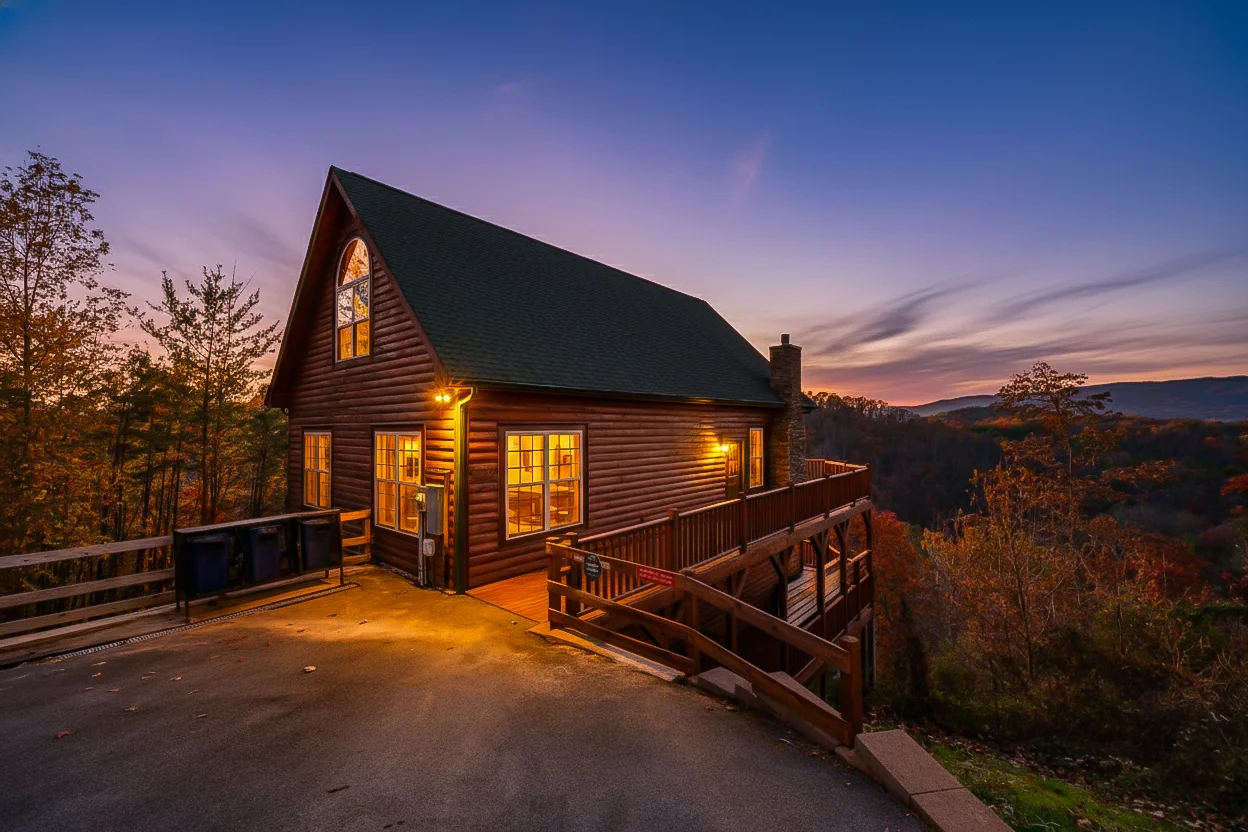
For the ultimate Smoky Mountain driving experience, Can’t Bear To Leave places you just minutes from Great Smoky Mountains National Park while offering panoramic mountain views from your own cabin deck. After long days of scenic driving and wildlife watching, the private indoor heated pool and mountain vistas provide the perfect retreat. Check availability for your mountain driving adventure.