
The Great Smoky Mountains offer 12 exceptional hiking trails spanning all difficulty levels, from the easy paved Laurel Falls Trail (2.6 miles round-trip) to the challenging Mount LeConte summit (11 miles round-trip). Popular trails like Clingmans Dome provide panoramic views after a steep half-mile climb, while family-friendly options like Gatlinburg Trail accommodate wheelchairs and strollers.
TL;DR: Your Complete Smoky Mountains Hiking Overview
- Best Easy Hike: Laurel Falls Trail – 2.6 miles, paved, accessible 75-foot waterfall
- Best Challenge: Mount LeConte via Alum Cave – 11 miles, 2,800 feet elevation gain
- Most Popular: Clingmans Dome – Half-mile to observation tower with 100-mile views
- Best for Families: Gatlinburg Trail – Fully paved, wheelchair accessible, 2 miles
- Peak Season: April through October, arrive before 9 AM for parking
- Trail Pass: No permits required, but some trailheads charge $5 parking
What Makes the Smoky Mountains Perfect for Hiking in 2026?
Great Smoky Mountains National Park maintains over 800 miles of trails across 522,427 acres, making it America’s most visited national park with 12.9 million visitors annually. The park’s unique position along the Appalachian Mountains creates diverse ecosystems ranging from hardwood coves at 900 feet elevation to spruce-fir forests above 5,000 feet.
The 2026 hiking season benefits from recent trail improvements and enhanced accessibility features. Park officials completed major repairs to high-traffic trails like Laurel Falls and Cataract Falls following storm damage in late 2024. New digital trail maps and real-time parking updates through the park’s mobile app help hikers plan more efficiently.
Wildlife viewing opportunities peak during spring and fall migrations. Black bears are most active from dawn through mid-morning, with over 1,500 bears calling the park home. White-tailed deer, wild turkeys, and over 240 bird species provide consistent viewing throughout the hiking season.
{{IMAGE: sunrise over misty Smoky Mountain peaks with layered ridges extending to horizon | best hikes smoky mountains sunrise views from peaks}}
Which Easy Trails Are Best for Families and Beginners?
Laurel Falls Trail
The most popular waterfall hike in the park features a completely paved 2.6-mile round-trip path to a stunning 75-foot cascade. The trail gains 314 feet of elevation through old-growth forest lined with mountain laurel and rhododendron blooms from April through June.
Parking fills by 8 AM on weekends during peak season. The Spirit Bear cabin, located just 8.5 miles from the trailhead, offers an ideal base for early morning starts. The paved surface becomes slippery when wet, requiring proper footwear despite the easy rating.
The waterfall’s two-tier structure creates excellent photo opportunities year-round. Winter ice formations add dramatic appeal, though the trail can become hazardous. Rangers recommend micro-spikes for winter hiking from December through February.
Gatlinburg Trail
This fully accessible 2-mile round-trip trail follows the West Prong Little Pigeon River from downtown Gatlinburg to the Sugarlands Visitor Center. The completely paved path accommodates wheelchairs, strollers, and bicycles, making it the park’s most inclusive hiking option.
The trail connects directly to Gatlinburg cabin rentals, allowing visitors to walk from their accommodation to the trail. You’ll cross two historic bridges and pass several swimming holes popular with local families during summer months.
Interpretive signs explain the area’s logging history and Cherokee heritage. The trail remains open 24 hours daily, making it perfect for evening strolls after dinner in downtown Gatlinburg.
Cataract Falls Trail
A moderate 1-mile round-trip hike leads to a 25-foot waterfall flowing over a series of rock ledges. The trail follows a well-maintained gravel path with minimal elevation gain, suitable for most fitness levels.
The waterfall maintains consistent flow throughout the year, unlike seasonal cascades that diminish during dry periods. A Southern Point of View sits just 2.5 miles from this trailhead, offering guests easy access plus community pool privileges.
{{IMAGE: families with children walking on paved trail with safety railings alongside mountain stream | family friendly smoky mountains hiking trails paved paths}}
What Are the Best Moderate Hikes for Scenic Views?
Clingmans Dome Trail
The park’s highest peak offers 360-degree views from a concrete observation tower accessed via a steep half-mile paved trail. At 6,643 feet elevation, clear days provide visibility extending 100+ miles across seven states.
The trailhead sits 7 miles from Can’t Bear To Leave, though the access road (Clingmans Dome Road) closes from December through March. Temperatures at the summit run 10-20 degrees cooler than valley locations, requiring layers even during summer.
Parking fills rapidly after 10 AM during peak season. The steep 12% grade challenges many visitors despite the short distance. The observation tower’s 45-foot height provides views above the surrounding spruce-fir canopy.
Alum Cave Trail
This 4.4-mile round-trip hike showcases the park’s geological diversity, passing through Arch Rock (a natural tunnel) before reaching the dramatic Alum Cave bluffs. The trail gains 1,000 feet elevation through diverse forest ecosystems.
The cave isn’t technically a cave but rather a large concave bluff stained with alum deposits. Hikers can extend this trail to reach Mount LeConte’s summit (11 miles total), making it a popular training hike for peak-baggers.
Cable handholds assist hikers along exposed sections above Arch Rock. The trail can become crowded by mid-morning, especially during fall foliage season from mid-October through early November.
Chimney Tops Trail
The 3.8-mile round-trip hike to these distinctive twin peaks gains 1,400 feet elevation through second-growth forest recovering from the 2016 wildfires. The final ascent requires scrambling over exposed rock faces to reach the summit.
Views from the peaks span the main Smokies ridge and extend into Tennessee Valley. The exposed granite formations create unique photo opportunities not found elsewhere in the park. Rock scrambling sections make this trail unsuitable for children under 10 or anyone uncomfortable with heights.
{{IMAGE: hikers ascending rocky trail with cable handholds and mountain views through gaps in forest canopy | moderate difficulty smoky mountain hiking trails with scenic overlooks}}
Which Challenging Trails Reward Advanced Hikers?
Mount LeConte via Alum Cave
The park’s third-highest peak (6,593 feet) requires an 11-mile round-trip hike with 2,800 feet of elevation gain. This strenuous trail combines the scenic Alum Cave route with additional mileage to reach LeConte Lodge, the park’s only backcountry accommodation.
The summit provides panoramic views of the Smokies’ main ridge and distant Blue Ridge Mountains. Heaven’s Porch, located 15 minutes from the trailhead, features a hot tub perfect for post-hike recovery. Allow 7-9 hours for the complete round-trip journey.
Weather conditions change rapidly above 5,000 feet elevation. Snow and ice can occur from November through April, requiring micro-spikes or crampons. The final mile includes exposed ledges with significant drop-offs.
Andrews Bald Trail
This 3.6-mile round-trip hike leads to the park’s highest grassy bald, offering 360-degree views without tree obstructions. The trail begins at Clingmans Dome parking area and descends 600 feet through spruce-fir forest to the open meadow.
The bald showcases flame azalea blooms during June, creating spectacular wildflower displays. Blueberry bushes provide late-summer foraging opportunities (with proper permits). The return climb back to Clingmans Dome challenges tired legs.
This trail offers easier access to expansive views compared to other peak climbs. The grassy summit provides excellent picnic opportunities with protected views from mountain winds.
Ramsey Cascades Trail
The park’s tallest waterfall (100 feet) requires an 8-mile round-trip hike through old-growth forest. The trail gains 2,100 feet elevation, following Ramsey Prong through pristine wilderness areas.
Ancient hemlocks and tulip trees create cathedral-like forest sections. The waterfall’s multiple tiers cascade over weathered sandstone cliffs into deep pools. Photography equipment requires extra care due to significant spray and mist near the falls.
The remote location means fewer crowds but also limited cell service. Inform others of your hiking plans and expected return time. Stream crossings can become challenging during heavy rainfall periods.
{{IMAGE: experienced hikers with backpacks navigating steep rocky trail with metal cable assists and distant mountain peaks | challenging advanced smoky mountains hiking trails steep climbs}}
When Is the Best Time to Hike in the Smoky Mountains?
Peak hiking season runs from April through October, with each season offering distinct advantages. Spring (April-May) brings wildflower blooms and comfortable temperatures but also unpredictable weather and muddy trails. Summer (June-August) provides the longest daylight hours and warmest weather but also the largest crowds and highest humidity.
Fall foliage peaks from mid-October through early November, creating the park’s busiest hiking period. Colors begin at higher elevations in late September and progress downward through November. Smoky Mountain vacation planning tools help optimize timing for specific trail goals.
Winter hiking (December-March) offers solitude and unique ice formations but requires specialized equipment and experience. Many higher elevation roads close during winter, limiting trailhead access. Daylight hours shrink to 10 hours or less.
Daily timing matters significantly. Arrive at popular trailheads before 8 AM to secure parking and avoid crowds. Afternoon thunderstorms occur frequently from June through August, making morning starts essential for safety.
What Should You Know About Trail Safety and Preparation?
Black bear encounters require specific protocols year-round. Make noise while hiking, carry bear spray, and never feed or approach wildlife. Bears are most active during dawn and dusk hours. Store all food in bear-proof containers when backpacking.
Weather conditions change rapidly with elevation. Temperatures drop 3-5 degrees per 1,000 feet of elevation gain. Carry layers even during summer hikes to high-elevation destinations. Afternoon thunderstorms develop quickly and produce dangerous lightning conditions above treeline.
Trail conditions vary seasonally and after weather events. Check current conditions at visitor centers or through the park’s official website before departing. Some trails may be temporarily closed due to storm damage or wildlife activity.
Cell phone coverage remains spotty throughout most of the park. Download offline maps and inform others of your hiking plans. Carry physical maps as backup navigation tools. GPS devices work more reliably than smartphones in wilderness areas.
Water sources exist along most trails, but treat all natural water before consumption. Carry purification tablets or filters for longer hikes. Dehydration occurs quickly during summer months due to high humidity levels.
How Do You Choose the Right Trail for Your Group?
Assess your group’s fitness level honestly before selecting trails. The weakest hiker determines the appropriate difficulty level. Easy trails like Laurel Falls accommodate most fitness levels, while strenuous options like Mount LeConte require good physical conditioning.
Consider time constraints carefully. Popular trails take longer due to crowds and photo stops. Allow extra time during peak season and holidays. The Views Fore Days cabin offers early morning access to trails, helping groups beat the crowds.
Weather tolerance varies among group members. Some people struggle more with heat and humidity, while others have difficulty with cold conditions. Choose trails appropriate for the day’s weather forecast and season.
Ages and mobility limitations affect trail selection significantly. Paved trails accommodate strollers and wheelchairs, while steep terrain requires sure footing and balance. Several park trails offer multiple turnaround options for flexible distances.
{{IMAGE: diverse group of hikers of different ages consulting trail map at wooden trail marker post | choosing right smoky mountains hiking trails for groups families}}
What Are the Lesser-Known Gems for Avoiding Crowds?
Porters Creek Trail offers a peaceful 3.8-mile round-trip hike through historic homesites and dense forest. The trail leads to Fern Branch Falls and showcases remnants of early Appalachian settlement including old cabin foundations and stone walls.
Cataloochee Valley provides excellent hiking opportunities with significantly fewer visitors than main park areas. The valley requires a longer drive from Gatlinburg but rewards visitors with elk viewing opportunities and historic structures.
Big Creek Trail follows an old railroad grade for easy walking along a mountain stream. The 10-mile round-trip hike to Midnight Hole and Mouse Creek Falls passes swimming holes and camping opportunities for overnight adventures.
Cosby area trails see fewer crowds due to their location on the park’s eastern edge. Hen Wallow Falls Trail provides a moderate 4.4-mile hike to a 90-foot waterfall through diverse forest ecosystems.
Gregory Bald Trail requires a 9-mile round-trip commitment but offers spectacular flame azalea displays during June. The remote location and distance filter out casual hikers, providing solitude even during peak season.
Frequently Asked Questions
Do I need permits or passes to hike in Great Smoky Mountains National Park?
No hiking permits are required for day hiking in Great Smoky Mountains National Park. The park doesn’t charge entrance fees, making it America’s most accessible national park. However, some trailhead parking areas charge $5 daily fees, particularly at popular destinations like Laurel Falls and Clingmans Dome. Overnight backpacking requires backcountry permits available through the park’s website.
Are dogs allowed on hiking trails in the Smoky Mountains?
Dogs are only allowed on two trails in the entire park: Gatlinburg Trail and Oconaluftee River Trail. Both are paved paths suitable for leashed pets. All other trails prohibit pets to protect wildlife and park ecosystems. Pet-friendly cabin rentals provide comfortable accommodation for visitors traveling with dogs.
What’s the best time of day to start hiking to avoid crowds?
Arrive at trailheads before 8 AM to secure parking and enjoy trails with fewer people. Popular destinations like Laurel Falls and Clingmans Dome fill parking areas by 9 AM during peak season. Afternoon starts (after 3 PM) also encounter fewer crowds as many day hikers return to their accommodations.
How difficult is the hiking in the Smoky Mountains compared to other national parks?
Smoky Mountains hiking offers moderate difficulty compared to western parks with less extreme elevation changes but higher humidity and dense forest conditions. Most popular trails gain 1,000-2,000 feet elevation over 2-5 miles. The park’s well-maintained trail system and frequent water sources make it ideal for beginning hikers transitioning from easy to moderate difficulty levels.
What should I carry for a day hike in the Smokies?
Essential items include water (1 liter minimum), snacks, rain jacket, first aid kit, map, and bear spray. Weather changes quickly with elevation, so pack layers even during summer. Sturdy hiking boots provide better traction than sneakers on steep or wet trail sections. Bring cash for parking fees at some trailheads.
Are there waterfalls accessible by wheelchair or stroller?
No waterfalls are directly wheelchair accessible, though Laurel Falls offers the most accessible option via a paved trail with moderate grades. The Gatlinburg Trail provides wheelchair access to river views and small cascades but doesn’t reach major waterfalls. Families with strollers should consider the Gatlinburg Trail or Oconaluftee River Trail for the easiest paved hiking experiences.
How busy do the trails get during fall foliage season?
Fall foliage season (mid-October through early November) represents the park’s busiest hiking period. Popular trails like Laurel Falls and Clingmans Dome experience significant overcrowding with parking areas full by 7 AM on weekends. Consider lesser-known trails or weekday visits during peak foliage for more enjoyable experiences. Traffic delays on park roads can add 30-60 minutes to normal driving times.
Your Perfect Smoky Mountains Hiking Adventure Awaits
The Great Smoky Mountains deliver unmatched hiking diversity, from gentle waterfall walks suitable for families to challenging peak climbs rewarding experienced hikers with panoramic views. Each trail offers unique experiences, whether you’re seeking wildflower displays, wildlife viewing, or simply peaceful forest immersion.
Success in the Smokies depends on matching trail difficulty to your group’s abilities and arriving early to beat crowds at popular destinations. The park’s 800+ miles of maintained trails ensure multiple visit opportunities, with new discoveries awaiting even frequent visitors.
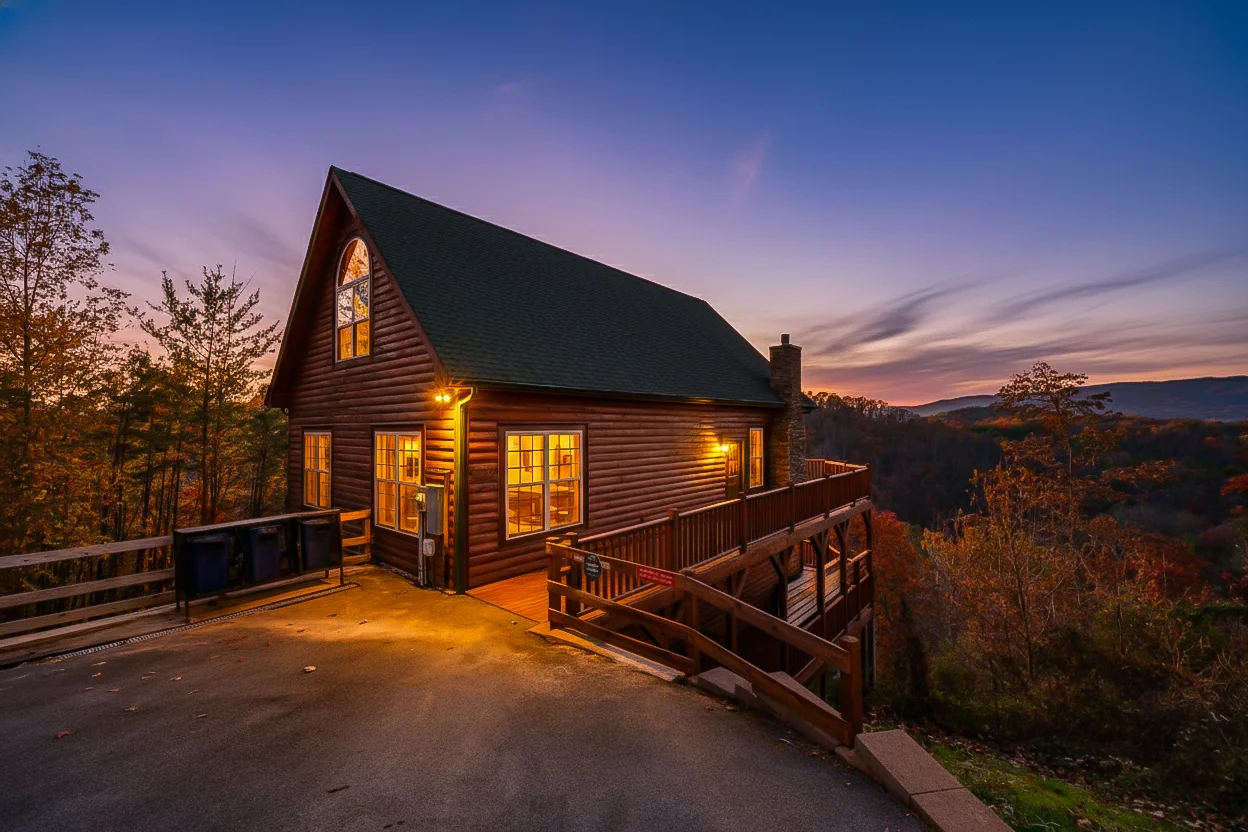
After conquering your chosen trails, Can’t Bear To Leave offers the perfect recovery spot with its private hot tub overlooking the mountains. Located minutes from multiple trailheads, this cabin provides the ideal base camp for your hiking adventures. Check availability and start planning your mountain escape.