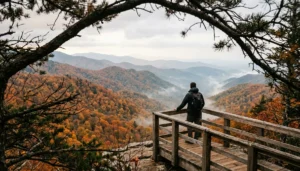

Pigeon Forge is approximately 7 miles from the Great Smoky Mountains National Park via the Gatlinburg entrance, the closest and most-used entry point. Under light traffic that translates to roughly 15 minutes. During peak summer weekends and fall foliage season, allow 30 to 45 minutes for the same stretch. The park is not just “nearby”: it is the defining reason Pigeon Forge exists as a tourism destination.
TL;DR
- Pigeon Forge to the Gatlinburg park entrance is about 7 miles, taking 15 minutes in light traffic and up to 45 minutes during peak season.
- The Great Smoky Mountains National Park has three main entrances: Gatlinburg (Tennessee), Cherokee (North Carolina), and Townsend (Tennessee): the Gatlinburg gate is closest to Pigeon Forge.
- The drive from Dollywood in Pigeon Forge to the Sugarlands Visitor Center in Gatlinburg typically takes 15 to 20 minutes in light traffic and 30 to 40 minutes in typical park-traffic conditions.
- Cades Cove, the most popular loop road in the park, is roughly 90 minutes from central Pigeon Forge: significantly further than most visitors expect.
- Pigeon Forge sits at the northern end of the 14.5-mile Great Smoky Mountains Parkway (SR 448/US 441), which runs directly through Gatlinburg and into the park.
- Hemlock Hills Cabin Rentals manages properties across Pigeon Forge, Sevierville, and Gatlinburg: all within a short drive of the park’s Tennessee entrances.
Sevier County, the broader region anchoring Pigeon Forge, Gatlinburg, and Sevierville, generated nearly $3.93 billion in visitor spending in 2026, according to the Tennessee Department of Tourist Development and Tourism Economics. That figure reflects the staggering draw of one of America’s most visited national parks sitting right at the county’s doorstep. In 2026, understanding exactly how close you are to the park from your cabin matters for daily itinerary planning.
This guide answers every distance question travelers ask before a Smoky Mountains trip: how far, how long, which route, and what to factor in by season. If you are planning a cabin stay in Pigeon Forge or the surrounding corridor, read this before mapping your first day hike.
How Far Is Pigeon Forge from the Smoky Mountains, Exactly?
Pigeon Forge is approximately 7 miles from the Gatlinburg entrance to Great Smoky Mountains National Park. This is the straight-line distance along US Route 441, which runs continuously from Pigeon Forge through downtown Gatlinburg directly into the park. Most visitors driving from a Pigeon Forge cabin will reach the park boundary in 15 minutes under normal traffic conditions.
The 7-mile figure comes from Pigeon Forge’s central Parkway area. If your cabin sits north of the Parkway toward Sevierville, add another 5 to 10 minutes. If you are staying south, near the Pigeon Forge and Gatlinburg boundary, you may reach the park entrance in under 10 minutes.
For context on the full corridor:
| Starting Point | Destination | Distance | Light Traffic | Peak Traffic |
|---|---|---|---|---|
| Pigeon Forge (central Parkway) | Gatlinburg entrance (park boundary) | ~7 miles | 15 min | 30-45 min |
| Dollywood | Sugarlands Visitor Center | ~10 miles | 15-20 min | 30-40 min |
| Pigeon Forge (central Parkway) | Cades Cove Loop | ~35 miles | 60-75 min | 90+ min |
| Pigeon Forge (central Parkway) | Newfound Gap / Appalachian Trail | ~17 miles | 30-35 min | 50-60 min |
| Sevierville | Gatlinburg park entrance | ~18 miles | 25-30 min | 45-60 min |
One distance most visitors underestimate: Cades Cove. People assume “inside the park” means “close.” Cades Cove is on the Tennessee side but requires driving through the park’s interior. Budget 90 minutes from Pigeon Forge and start early, ideally before 9 AM, to avoid the wildlife traffic jams that build up mid-morning.
Is Pigeon Forge Considered Part of the Smoky Mountains?
Pigeon Forge is a gateway city to Great Smoky Mountains National Park, not technically part of the protected park itself. The city sits in Sevier County, Tennessee, in the foothills of the Appalachian range, and it serves as the primary commercial corridor for visitors heading into the mountains. The Great Smoky Mountains Parkway, which runs 14.5 miles connecting Sevierville to the park, passes directly through Pigeon Forge before reaching Gatlinburg and the park boundary.
In common usage, locals and visitors do describe the entire Pigeon Forge, Gatlinburg, and Sevierville corridor as “the Smoky Mountains.” That makes practical sense: the town’s character, economy, and landscape are all shaped by the mountains immediately behind it. You can see the ridgeline from the Parkway on a clear day. Many cabins in the Pigeon Forge foothills sit at elevations above 2,000 feet, surrounded by the same hardwood forest that covers the park interior.
But there is a real distinction worth knowing. The national park itself covers roughly 522,000 acres and is managed by the National Park Service, with no admission fee. Pigeon Forge sits outside that boundary and is privately developed, home to Dollywood, dinner shows, outlet shopping, and the dense stretch of attractions along the Parkway. You get both experiences from a Pigeon Forge base: the commercial entertainment strip in the afternoon and the quiet hiking trails of the park in the morning.
Which Route Should You Drive from Pigeon Forge to the Smokies?
The main driving route from Pigeon Forge to Great Smoky Mountains National Park is US Route 441 (the Great Smoky Mountains Parkway), which runs continuously from Sevierville through Pigeon Forge, through downtown Gatlinburg, and directly into the park as Newfound Gap Road. This is the fastest and most direct option for most visitors, and it is the only paved road that crosses the park’s interior, connecting the Tennessee and North Carolina sides.
Three routes offer different experiences depending on your destination within the park:
Route 1: US 441 through Gatlinburg (Most Common)
This is the default route for anyone heading to the Sugarlands Visitor Center, Alum Cave Trail, Newfound Gap, or Clingmans Dome. From central Pigeon Forge, take the Parkway south through Gatlinburg and enter the park at the Sugarlands gate. Distance from Pigeon Forge: roughly 10 miles to Sugarlands. Expect 20 to 40 minutes depending on Gatlinburg traffic. Note that Gatlinburg’s downtown can back up significantly between 11 AM and 4 PM on weekends.
Route 2: Little River Road via Townsend (For Cades Cove)
Little River Road (TN-73) runs from Townsend through the park to Gatlinburg. If Cades Cove is your destination, a western approach via the Foothills Parkway and Townsend saves time compared to going through Gatlinburg. From Pigeon Forge to Townsend is roughly 20 miles. From Townsend the Cades Cove entrance adds another 8 miles. This route takes about 60 to 75 minutes in light traffic but avoids the heavy Gatlinburg congestion entirely.
Route 3: Foothills Parkway (Scenic Alternative)
The Foothills Parkway runs approximately 33 miles from Maryville, Tennessee, to Wears Valley and offers dramatic ridge-top views of the park without actually entering it. This is not the route to take if hiking is your goal, but it is excellent for photography and a quieter drive. From Pigeon Forge, expect about an hour to reach Wears Valley via this route. The western section of the Foothills Parkway, running from Chilhowee Lake toward Wears Valley, is particularly scenic and significantly less congested than US 441.
How Does Traffic Affect the Drive from Pigeon Forge to the Park?
Traffic is the single biggest variable in any drive from Pigeon Forge to Great Smoky Mountains National Park, and it is consistently underestimated by first-time visitors. On a Wednesday morning in February, the 7-mile stretch to the park entrance takes 15 minutes. On a Saturday afternoon in October during fall foliage season, the same stretch can take 45 minutes to over an hour. Understanding when traffic builds lets you plan around it.
By Season:
- July (peak summer): Expect the heaviest congestion. Families are out of school, Dollywood is at peak capacity, and the Parkway backs up in both directions by 10 AM. Sugarlands Visitor Center fills its parking lot by mid-morning. Arrive at any trailhead before 8 AM or after 3 PM.
- October (fall foliage): The most congested month in the park. According to the National Park Service, peak color typically runs mid-October through early November at lower elevations. Wildlife activity also increases, and any bear sighting on US 441 inside the park can bring traffic to a standstill for 20 to 30 minutes.
- December (holiday): Surprisingly busy. Gatlinburg runs a well-known winter lights festival, and the Parkway fills with visitors. Plan an extra 20 minutes for any trip into town during the holiday stretch.
- January and February (off-season): The fastest time to make this drive. You may reach Sugarlands in under 20 minutes even on a weekend. Trail parking is rarely an issue, and the park is noticeably quieter despite remaining fully open year-round.
By Time of Day:
- Before 8 AM: Consistently the best time to drive toward the park. Most trailhead lots have open spaces and you beat both the Gatlinburg restaurant crowd and the morning check-out traffic from area cabins.
- 10 AM to 3 PM: Worst window on busy days. This is when Gatlinburg’s downtown pedestrian traffic spills into the road corridor and park lot queues form.
- After 4 PM: Evening traffic on the Parkway flows mainly outbound, making an inbound trip reasonably smooth. Sunset hikes and late-afternoon drives to overlooks are a solid strategy in summer.
One detail few articles mention: cell service drops significantly inside the park on Newfound Gap Road. Download your park entrance and directions information ahead of time, along with offline trail maps. GPS signal can be unreliable at higher elevations near Clingmans Dome.
Which Is Better to Stay, Gatlinburg or Pigeon Forge?
Gatlinburg and Pigeon Forge serve different types of Smoky Mountains visitors, and choosing between them depends on what you want most from the trip. Gatlinburg is the quieter, more mountain-town option: its downtown sits directly at the park entrance, walkable from dozens of independent restaurants, and its streets have a more settled character than the entertainment corridor to the north. Pigeon Forge is the activity hub, where Dollywood, dinner shows, outlet shopping, and the dense Parkway strip dominate the experience.
For hikers and nature-focused travelers, Gatlinburg has a clear location advantage. The park entrance is steps from downtown, and trailheads like the Alum Cave Trail are reachable in under 20 minutes. You skip the Gatlinburg traffic bottleneck entirely because you are already through it.
For families with kids who want a mix of theme park entertainment and mountain scenery, Pigeon Forge makes more practical sense. The wider variety of cabin sizes, proximity to Dollywood, and abundance of wet weather alternatives (go-kart tracks, WonderWorks, dinner shows) make it the better all-weather base.
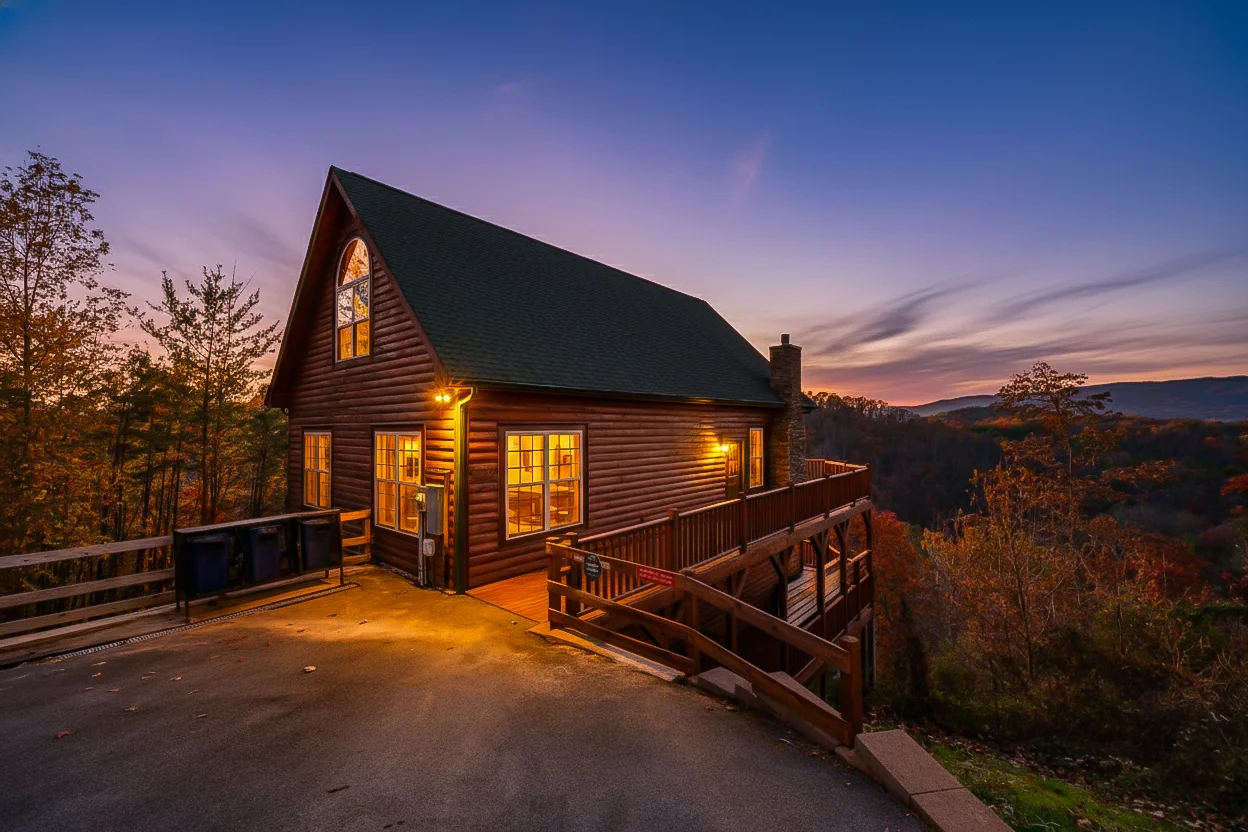
A middle-ground option that many overlook: Sevierville cabins. Located north of Pigeon Forge, Sevierville adds 5 to 15 minutes to the park drive but often offers quieter roads, more privacy, and more expansive cabin properties. Hemlock Hills Cabin Rentals operates several Sevierville properties worth considering, including Smoky Mountain Serenity Lodge, a brand-new luxury cabin at The Lodges of Reedmont with a rooftop terrace, cedar sauna, and panoramic forest views. It sits outside Sevierville with quick access to both Pigeon Forge attractions and the park’s Gatlinburg entrance.
For more detail on the full Gatlinburg cabin selection, browse the Gatlinburg Cabins collection, or compare it against the Pigeon Forge Cabins lineup to find the right location for your trip.
How Far Is Pigeon Forge from Specific Park Locations?
Great Smoky Mountains National Park covers terrain across Tennessee and North Carolina, and distance within the park varies significantly depending on your destination. “Going to the Smokies” from Pigeon Forge means very different drive times depending on whether you are heading to a trailhead near the entrance or a destination deep inside the park’s interior.
Here is a breakdown by destination:
Sugarlands Visitor Center
The Sugarlands Visitor Center is the main Tennessee-side hub and the first stop most visitors make. It is approximately 10 miles from Dollywood in Pigeon Forge, taking 15 to 20 minutes in light traffic. The visitor center provides trail maps, ranger programs, and exhibits on park ecology. Arrive before 9 AM on busy days to secure parking, as the lot fills by mid-morning on summer and fall weekends.
Alum Cave Trail
One of the park’s most popular hikes, the Alum Cave trailhead sits about 9 miles inside the park from the Gatlinburg entrance, putting it roughly 16 miles from central Pigeon Forge. Allow 30 to 45 minutes in normal conditions. The parking area at the Alum Cave trailhead routinely fills before 8 AM during peak season, and the park has introduced parking reservations for certain high-demand areas.
Newfound Gap
Newfound Gap, where Newfound Gap Road (US 441) crosses the Appalachian Trail at the Tennessee-North Carolina state line, is about 17 miles from central Pigeon Forge. Plan 35 to 50 minutes depending on traffic. The overlook here sits at 5,046 feet elevation and offers some of the most accessible panoramic views in the park. On clear days the layered ridgelines extend into four directions, a genuinely impressive sight even from the parking area.
Cades Cove
Cades Cove is the most popular destination in the entire park and also the most distant from Pigeon Forge. The 11-mile one-way loop road starts about 25 miles from Pigeon Forge via Townsend, making the total drive roughly 35 miles and 60 to 90 minutes. The loop is closed to vehicles on Wednesdays and Saturdays until 10 AM to allow bicycles and foot traffic. Go on a Tuesday morning to avoid the worst vehicle queues inside the loop.
Clingmans Dome
The highest point in the park at 6,643 feet, Clingmans Dome requires a 7-mile side road from Newfound Gap that adds another 20 minutes to the drive from Pigeon Forge. Total distance from central Pigeon Forge: about 27 miles, taking 50 to 70 minutes in typical conditions. The road is closed from December through March due to ice and snow.
What Are the Free Things to Do Near Pigeon Forge in the Smokies?
Great Smoky Mountains National Park charges no entrance fee, making it one of the few major national parks in the country where access is entirely free. This is a significant practical fact for families visiting the Pigeon Forge area: your 7-mile drive to the park gets you into one of the most biodiverse temperate forests in North America without paying a single admission dollar.
Free activities accessible from Pigeon Forge within a 30-minute drive include:
- Hiking on more than 800 miles of maintained trails, ranging from flat creekside walks to strenuous summit climbs. The Laurel Falls Trail, about 15 miles from Pigeon Forge, is the park’s most-visited waterfall hike and paved for easy footing.
- Scenic drives along Newfound Gap Road, which passes through old-growth forest, spruce-fir zones, and multiple roadside overlooks. The entire road is free and takes about 1.5 to 2 hours to drive from Gatlinburg to Cherokee with stops.
- Wildlife watching in Cades Cove and along US 441 near the park boundary. Black bear sightings are common in spring and fall, and white-tailed deer appear near the Cades Cove meadows year-round.
- Picnicking at designated sites throughout the park, including Metcalf Bottoms and Greenbrier, both accessible in under 30 minutes from Pigeon Forge.
- Ranger-led programs at Sugarlands Visitor Center, typically free and running spring through fall on topics ranging from wildflower identification to black bear ecology.
One free resource few visitors use before arriving: the official Great Smoky Mountains National Park website maintains a current alerts page listing trail closures, road conditions, and parking reservation requirements. Check it the morning of your visit to avoid driving 30 minutes to a trailhead that has been closed for maintenance.
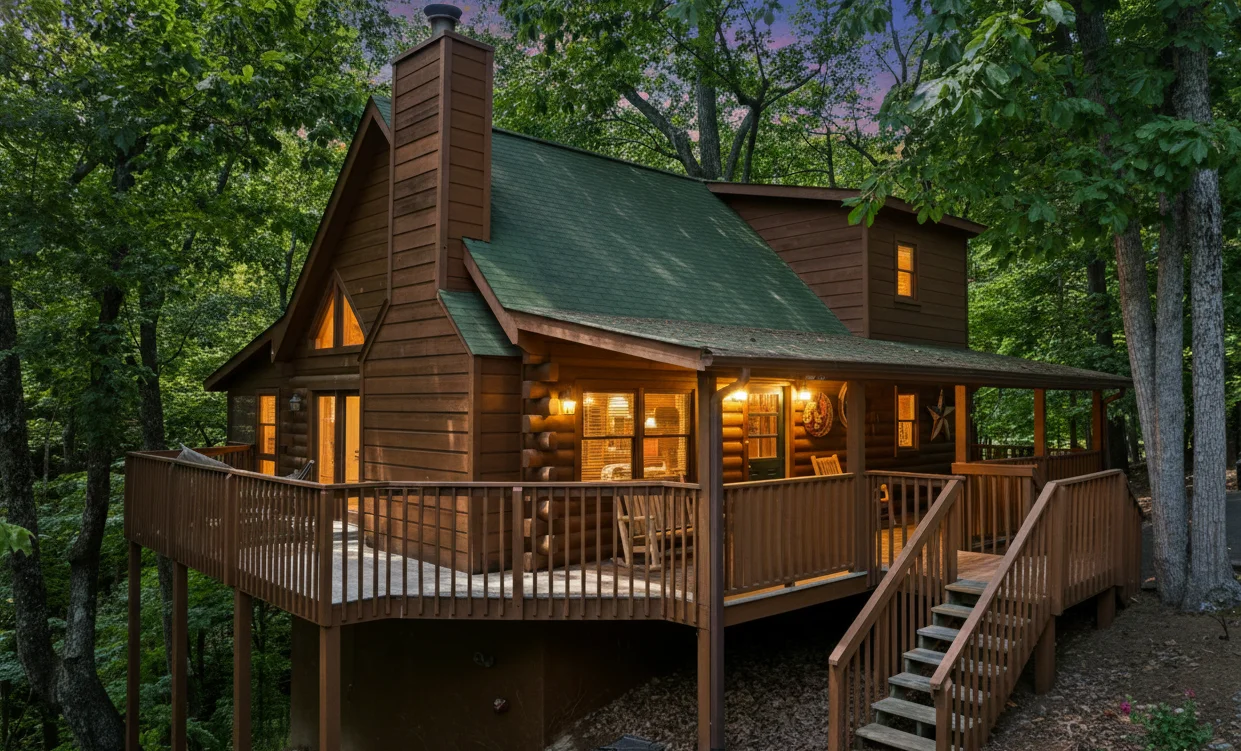
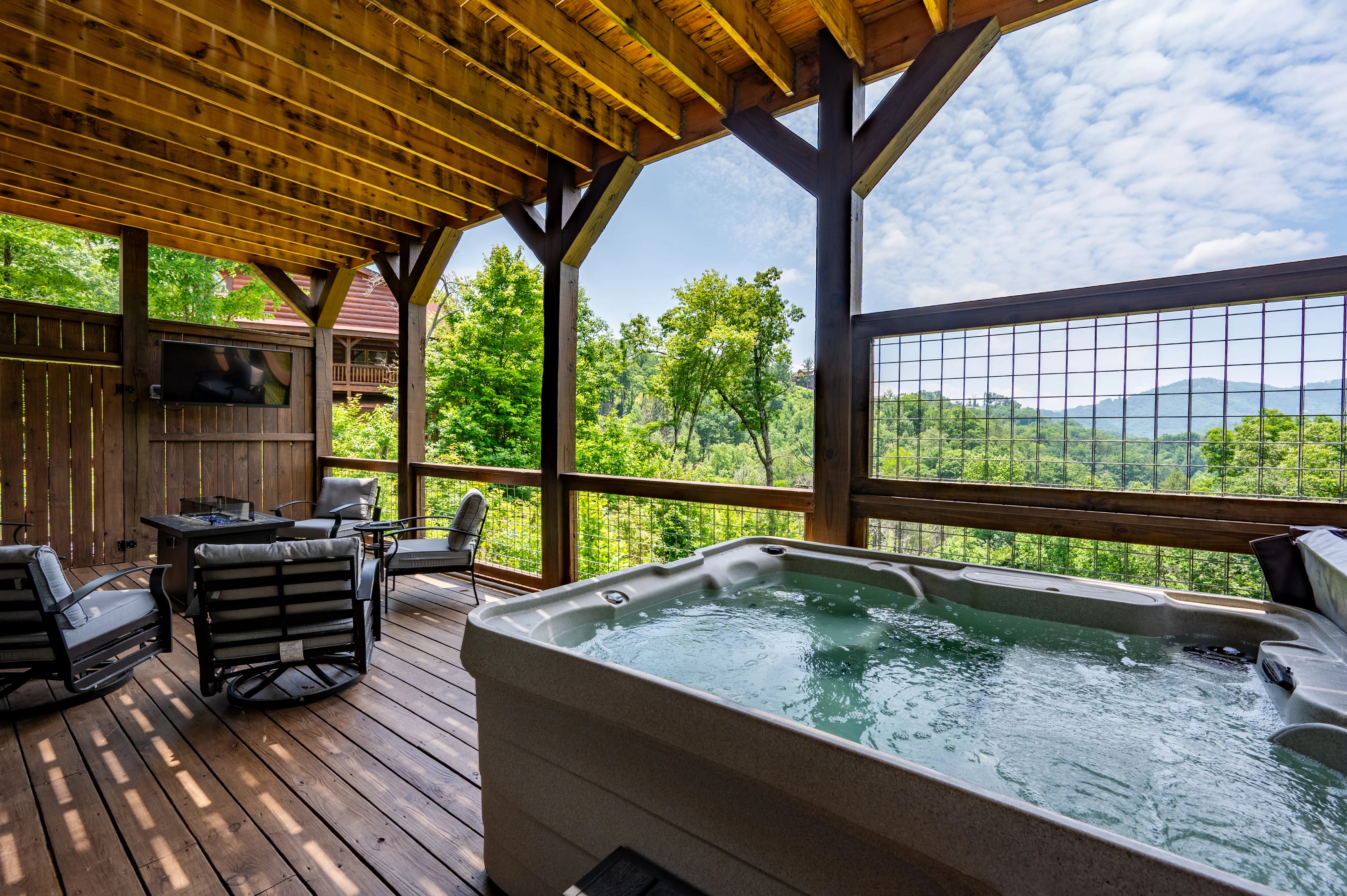
If you are planning several hiking days from a Pigeon Forge base, properties like Wandering Oak (a newly renovated 3-bedroom cabin just 1 mile from the Pigeon Forge Parkway) put you close enough to make early morning park departures genuinely easy. The combination of a hot tub for post-hike recovery and a gas fire pit for evening hang-outs matches perfectly with active park days. If you need a larger group footprint for a family reunion with park adventures planned, check the Pigeon Forge cabin rentals page for size and availability.
What Should You Know About Driving Into the Park from Pigeon Forge?
Driving from Pigeon Forge to Great Smoky Mountains National Park involves a few practical considerations that most travel guides skip. Getting the logistics right is what separates a smooth hiking day from a frustrating two-hour round-trip with no parking space.
Parking Reservations and Lot Capacity
Since 2021, the National Park Service has required timed entry permits for the Clingmans Dome Road area during peak season, typically May through October on weekends and holidays. In 2026, check the park entrances and directions page for current reservation requirements before you drive, since these policies are updated seasonally. Arriving without a required permit means turning back at the lot entrance.
RV and Large Vehicle Considerations
Vehicles over 30 feet are not permitted on Clingmans Dome Road. The Cades Cove loop road is manageable for RVs but can become a bottleneck at the narrower sections near the historic buildings. If you are driving a large vehicle, US 441 (Newfound Gap Road) is the safest primary route, as it is fully maintained and regularly traveled by tour buses.
The Gatlinburg Bypass
Most Pigeon Forge visitors driving south on US 441 do not realize there is a bypass road that allows you to skip Gatlinburg’s downtown traffic. The Gatlinburg Bypass (also signed as US 321 North) branches east from the main parkway before downtown and reconnects near the park entrance, shaving 10 to 20 minutes off your drive on busy days. Locals use it routinely. If Google Maps is routing you straight through downtown Gatlinburg on a Saturday afternoon, look for the bypass sign before the traffic gets thick.
Shuttle Services Between Gatlinburg and the Park
Gatlinburg operates a trolley service that includes a route into the park during peak season, stopping at the Sugarlands Visitor Center. The Gatlinburg Trolley is an inexpensive option if you are staying in or near Gatlinburg and want to avoid parking stress on busy trail days. From Pigeon Forge, there is no direct public shuttle into the park as of 2026. The Pigeon Forge Trolley system serves the Parkway corridor between Pigeon Forge and Gatlinburg but does not enter the national park boundary. Plan to drive from Pigeon Forge or arrange to transfer in Gatlinburg.
Fuel and Supplies Before You Enter
There are no gas stations inside Great Smoky Mountains National Park. Fill up in Pigeon Forge or Gatlinburg before heading in, particularly if you plan to drive the full length of Newfound Gap Road to Cherokee, North Carolina. The round trip from Gatlinburg to Cherokee and back is about 70 miles. Food and water are available at Gatlinburg and Cherokee, but nothing is sold along Newfound Gap Road itself.
For groups using a large cabin near the park, the proximity math matters. Can’t Bear To Leave is a 3-bedroom, 11-guest cabin located between Wears Valley and Pigeon Forge, described as just outside the entrance to the national park. That means an even shorter commute to the Townsend entrance than what most Pigeon Forge accommodations offer. The cabin’s slate pool table and indoor heated pool handle the evenings, and the location handles the mornings.
Frequently Asked Questions
How far is Pigeon Forge from the entrance to the Smoky Mountains?
Pigeon Forge is approximately 7 miles from the Gatlinburg entrance to Great Smoky Mountains National Park, the closest main Tennessee-side entry point. Under light traffic conditions, that drive typically takes 15 minutes. During peak summer and fall foliage season, the same stretch can take 30 to 45 minutes due to Gatlinburg downtown congestion and park parking lot queues.
Is Pigeon Forge considered the Smoky Mountains?
Pigeon Forge is a gateway city to the Smoky Mountains, not part of the protected national park itself. The city sits in the foothills of the Appalachian range in Sevier County, Tennessee, and the Great Smoky Mountains Parkway (US 441) runs directly through it toward the park. In common usage, the Pigeon Forge and Gatlinburg corridor is widely referred to as “the Smoky Mountains” region, even though the national park boundary begins in Gatlinburg.
How far is the drive from Pigeon Forge to Cades Cove?
Cades Cove is approximately 35 miles from central Pigeon Forge, taking 60 to 90 minutes depending on traffic and route. The fastest approach is via Townsend using the Foothills Parkway west, which avoids Gatlinburg congestion. The 11-mile one-way Cades Cove loop road adds another 30 to 90 minutes once you are inside the park, depending on wildlife stops and vehicle volume.
Which is better for accessing the Smokies: Gatlinburg or Pigeon Forge?
Gatlinburg provides the quickest access to the national park, with the main Tennessee entrance at the southern edge of downtown. Pigeon Forge is 7 miles further north but offers a wider variety of cabin sizes, family attractions, and entertainment options along the Parkway. For hikers prioritizing park access, Gatlinburg is the stronger base. For families wanting a mix of theme parks and mountain scenery, Pigeon Forge is the more practical choice.
How long does it take to drive from Pigeon Forge to Newfound Gap?
Newfound Gap sits about 17 miles from central Pigeon Forge, typically taking 35 to 50 minutes in normal conditions. The drive follows US 441 south through Gatlinburg and continues up Newfound Gap Road into the park. Add 15 to 30 minutes during peak summer weekends or fall foliage season, when Gatlinburg and park parking areas create significant delays.
Is there a shuttle from Pigeon Forge to the Smoky Mountains?
As of 2026, there is no direct public shuttle from Pigeon Forge into Great Smoky Mountains National Park. The Pigeon Forge Trolley system operates along the Parkway corridor between Pigeon Forge and Gatlinburg but does not cross the park boundary. Gatlinburg operates a seasonal trolley service that includes a route to the Sugarlands Visitor Center. Visitors based in Pigeon Forge typically drive and park, or transfer to the Gatlinburg trolley system once in town.
Can you drive through the Smokies from Pigeon Forge to North Carolina?
Yes. Newfound Gap Road (US 441) is the main paved road through Great Smoky Mountains National Park and connects Gatlinburg, Tennessee, to Cherokee, North Carolina. The full crossing from Gatlinburg to Cherokee is approximately 35 miles and takes about 1.5 hours without stops, though winding mountain roads and scenic pull-offs typically extend the journey. From Pigeon Forge, add another 15 to 20 minutes for the drive through Gatlinburg before entering the park.
How far is Pigeon Forge from Knoxville, and how does it connect to the Smokies?
Pigeon Forge is just over 30 miles southeast of Knoxville, Tennessee, roughly a 45-minute drive along I-40 East to TN-66 South. From Knoxville, many visitors use the Foothills Parkway from Maryville for a scenic approach. Pigeon Forge then serves as the primary staging point for visiting Great Smoky Mountains National Park, with the park entrance an additional 7 miles south through Gatlinburg.
How to Plan Your Smoky Mountains Trip from Pigeon Forge
Planning your park days from a Pigeon Forge cabin is straightforward once you understand the distance and traffic patterns. The 7-mile gap between Pigeon Forge and the park entrance is short enough to visit the park multiple times during a week-long trip without it feeling like a project.
Here is a practical day-planning framework:
- Leave before 8 AM for any popular trailhead. Alum Cave, Laurel Falls, and the Chimney Tops trail areas fill their parking lots early. A 7 AM departure from your Pigeon Forge cabin gets you to most trailheads before the rush, giving you the first 3 to 4 hours of the trail almost to yourself.
- Check current park alerts the night before. Trail closures, bear activity zones, and parking reservation requirements change seasonally. The official National Park Service site updates alerts in real time.
- Use the Gatlinburg Bypass on busy afternoons. Returning to Pigeon Forge after 2 PM on a weekend, take the bypass (US 321 North) to avoid the downtown Gatlinburg bottleneck. It adds no real distance and can save 20 minutes in heavy traffic.
- Save Cades Cove for a weekday. The loop road is least congested Tuesday through Thursday. Wednesday and Saturday mornings are vehicle-free, reserved for bicycles and walkers, which creates a different but worthwhile experience if you have bikes or want a peaceful stroll through the meadows.
- Plan a scenic drive on your arrival or departure day. Newfound Gap Road takes about 2 hours with stops and requires no hiking preparation. It is an excellent way to see the park on a half-day when you do not want to commit to a full hike.
For families staying in Pigeon Forge with a mix of ages and abilities, properties that put everyone at ease after a park day matter as much as the cabin’s proximity. Views Fore Days is a 5-bedroom, 16-guest cabin just minutes from Pigeon Forge and Gatlinburg, with a private heated indoor pool, a 6-seat home theater, and a game room featuring a pool table and shuffleboard. After a morning in the park, that lineup keeps the whole group happy regardless of age or energy level.
For a complete trip-planning overview tailored to the Smoky Mountain region, the Smoky Mountain Vacation Planner covers seasonal timing, activity recommendations, and accommodation guidance across the Pigeon Forge, Gatlinburg, and Sevierville corridor.
Wrapping Up: How Far Is Pigeon Forge from the Smokies?
The short answer: about 7 miles and 15 to 45 minutes, depending entirely on when you drive. From a well-located Pigeon Forge or Sevierville cabin, Great Smoky Mountains National Park is genuinely close, close enough to visit on a morning, return for lunch at the cabin, and head back in the afternoon if you want. That kind of flexibility is one of the main practical advantages of a cabin stay over a downtown hotel in either direction.
In 2026, Sevier County continues to draw visitors at record pace, with the region ranking 3rd among all 95 Tennessee counties in visitor spending according to the Sevier County Government and Tennessee Department of Tourist Development. Understanding the real distances, traffic patterns, and route options lets you build a trip itinerary that actually works rather than one that spends half its time stuck on the Parkway.
Plan your early mornings for the park, your afternoons for the Pigeon Forge and Gatlinburg attractions, and your evenings at the cabin. That rotation, repeated across three or four days, gives most families exactly the Smoky Mountains trip they came for.
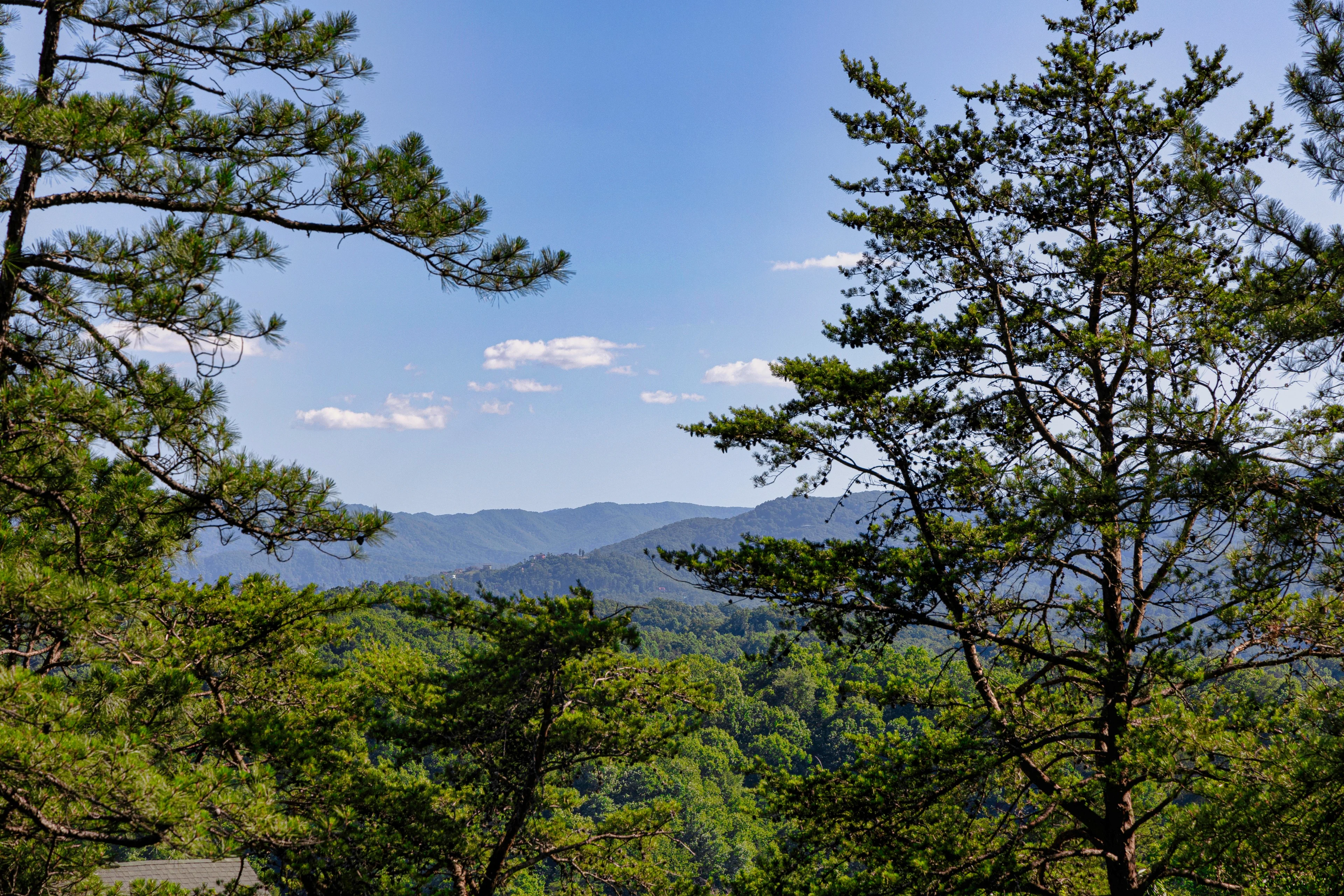
If you want a Pigeon Forge area base that genuinely earns its place, Smoky Mountain Serenity Lodge hits the right combination of location and amenity depth. The rooftop terrace with its cedar sauna, dual outdoor fireplaces, and unobstructed forest views is the kind of evening experience that matches what you drove to the Smokies for in the first place. Check availability for your dates here.