TL;DR: Tennessee is a world-class fly fishing destination, offering everything from wild brook trout in Smoky Mountain streams to massive brown trout in its famous tailwaters. For the ultimate angling trip, base yourself in a cabin that offers both comfort and convenience. If you’re looking for a cabin that combines location, comfort, and authentic Smoky Mountain charm, Hemlock Hills Cabin Rentals provides the perfect home base near Gatlinburg and Pigeon Forge, putting you minutes from the best water.
Imagine the quiet thrill of casting a line into a crystal-clear Smoky Mountain stream, with nothing but the sounds of nature all around you. Tennessee offers some of the most rewarding and diverse fly fishing in the entire country. You can find everything from wild brook trout in remote mountain creeks to absolute monster brown trout in world-class tailwaters. This guide is your complete roadmap to planning the perfect angling adventure.
Why Tennessee Is a Fly Fisher's Paradise
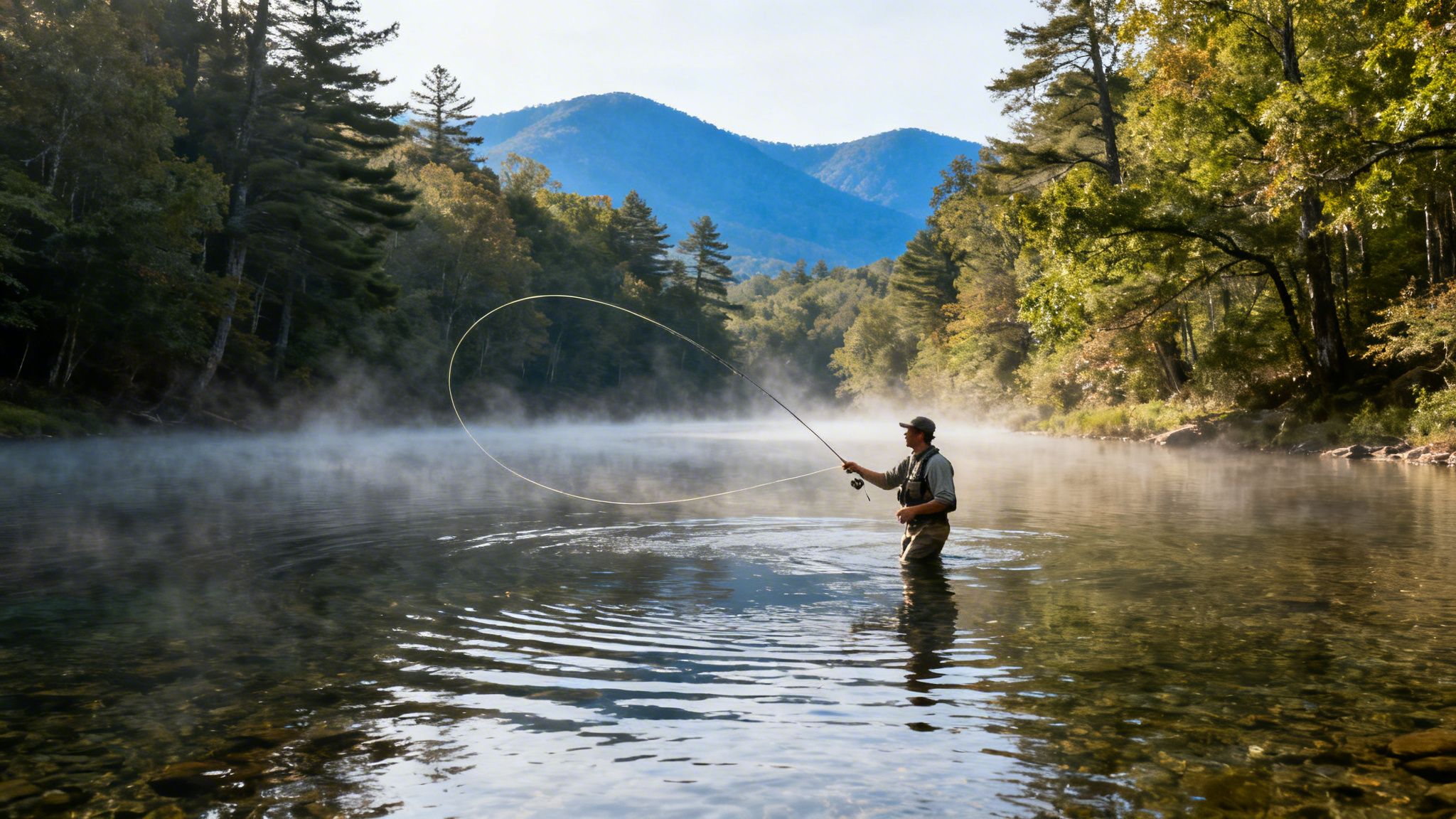
Tennessee's reputation as a top-tier fly fishing destination isn't just about pretty scenery; it's built on a foundation of incredible biodiversity and well-managed fisheries. The state is home to hundreds of miles of cold, clean water that supports booming populations of trout and other game fish. From the high-elevation streams of the Great Smoky Mountains National Park to the powerful tailwaters below massive dams, the variety is simply outstanding.
This incredible angling scene has also become a huge part of the local economy. The sport's growth is undeniable—trout angling alone generates an estimated $53 million in economic impact. The number of trout anglers has jumped by 10%, and the total number of fishing trips has soared by an impressive 40%, which shows just how popular these waters have become.
What Makes the Experience Unique
What really sets Tennessee apart is its unique blend of accessibility and true wildness. You can find yourself casting to native brook trout in a secluded creek just a short hike from the road, or drifting down a major river hunting for a personal-best brown trout. This combination makes it perfect for anglers of all skill levels, from beginners to seasoned pros.
For the ideal home base to access these legendary waters, look no further than a cozy cabin. Perfect for families, groups, or couples who want the best of both nature and convenience, a cabin provides the space and amenities to make your trip unforgettable.
After a day on the river, there's nothing better than returning to a comfortable retreat. Imagine unwinding in a private hot tub with stunning mountain views—it's the ultimate angler’s reward.
Choosing the right place to stay can turn a simple fishing trip into a memorable vacation. A good cabin provides that perfect basecamp experience, with amenities that cater directly to outdoor adventurers. Whether you're traveling solo, with family, or with a group of fishing buddies, having a cozy cabin to come back to makes all the difference. To get started, check out our guide on the best places for fly fishing in the Smokies.
Mapping Out Your Tennessee Fishing Adventure
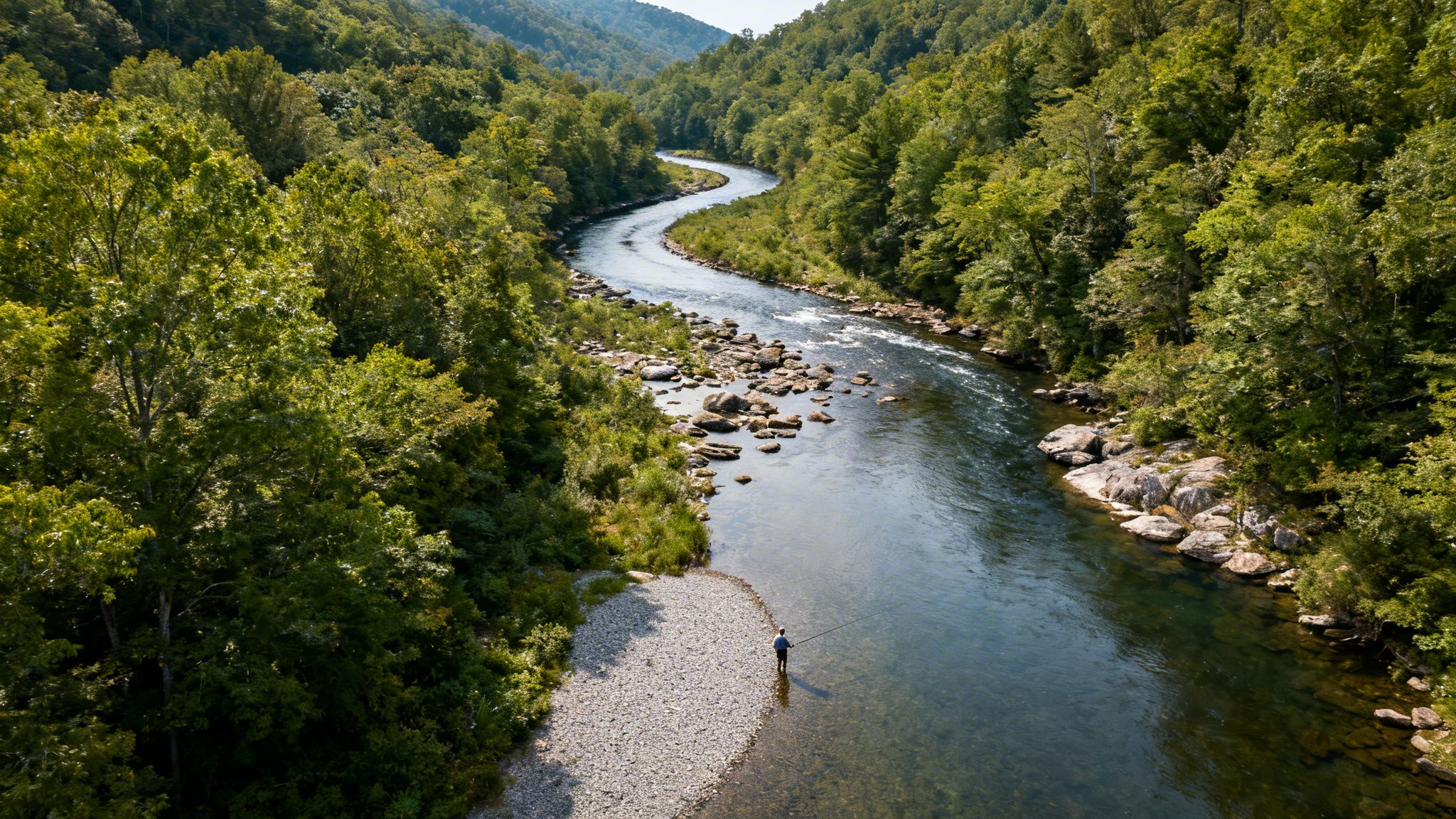
Tennessee's waters are a fly fisher's paradise, where every river system serves up a unique challenge and its own special reward. Think of this as your field guide to the best spots you can hit near Gatlinburg and Pigeon Forge, a region blessed with everything from intimate mountain streams to powerful, trout-filled rivers.
We’ll start by exploring the legendary freestone rivers tucked away inside the Great Smoky Mountains National Park. These are the places you go for wild, eager trout and scenery that will stop you in your tracks. Then, we’ll head to the mighty tailwaters, where massive trout lurk in the cold, clear depths released from towering dams.
Consider this your blueprint for finding the perfect water to match your style. For each spot, you’ll get the inside scoop on the best access points, what you’ll be casting for, and what makes the fishing so unforgettable—all just a short drive from your Smoky Mountain cabin.
Great Smoky Mountains National Park Freestone Streams
The Great Smoky Mountains National Park (GSMNP) is the heart and soul of fly fishing in the Appalachians. With over 800 miles of fishable streams, you could spend a lifetime exploring and never see it all. These are what we call freestone rivers, meaning their flow is dictated by rainfall, not dams. This creates a wild, natural playground where native Southern Appalachian brook trout, rainbow trout, and brown trout flourish.
Little River: This is arguably the most famous river in the Smokies, and for good reason. The Little River offers incredible access and a fantastic population of rainbows and browns. Its three forks—East, Middle, and West—provide miles of classic pocket water, riffles, and deep pools that are just begging for a well-placed dry fly. The stretch along Little River Road near Elkmont Campground is a perfect place to get started.
Abrams Creek: Tucked away in the beautiful Cades Cove area of the park, Abrams Creek is known for growing trout a little bigger than average. Getting to the best spots requires a bit of a hike, but the reward is often a heftier fish in a more secluded setting. To make a full day of it, check out our guide on how to best enjoy the Cades Cove scenic loop.
Oconaluftee River: Hopping over to the North Carolina side of the park, the "Luftee" is a larger river that holds some truly impressive brown trout. It’s easy to get to from the town of Cherokee and has a great mix of stocked and wild fish, making it a solid choice for anglers of all skill levels.
Fishing these park streams is the quintessential mountain experience. The trout here are wild and smart, so they’ll reward you for being stealthy and making a delicate cast. It's a place where you can really connect with nature and the ancient rhythms of the mountains.
World-Class Tennessee Tailwaters
In stark contrast to the tumbling mountain streams, Tennessee's tailwaters are big, powerful rivers born from the bottom-release dams of deep reservoirs. This process sends cold, oxygen-rich water downstream year-round, creating the perfect habitat for trout to grow to trophy sizes.
Tailwater fisheries are like supercharged ecosystems. The consistently cold water and abundant food supply allow trout to grow much larger and faster than their cousins in the warmer, less nutrient-rich mountain streams.
Fishing these big rivers often calls for different tactics, like nymphing from a drift boat or stripping big streamers. But the potential payoff? A fish that you'll be telling stories about for years to come.
To help you get started, here's a quick look at the best rivers to target in the region.
Top Tennessee Fly Fishing Rivers Near The Smoky Mountains
This table gives you a snapshot of the top spots, what you can expect to catch, and when you should go.
| River System | Primary Target Species | Best Season | Proximity To Gatlinburg And Pigeon Forge |
|---|---|---|---|
| Little River | Wild Rainbow & Brown Trout | Spring, Fall | Excellent (within GSMNP) |
| Abrams Creek | Wild Rainbow & Brown Trout | Spring, Fall | Excellent (within GSMNP) |
| Oconaluftee River | Wild & Stocked Brown Trout | Spring, Fall, Winter | Good (short drive to NC side of park) |
| South Holston River | Wild Brown & Rainbow Trout | Year-Round | Day Trip (approx. 2 hours) |
| Clinch River | Brown & Rainbow Trout | Year-Round | Day Trip (approx. 1.5 – 2 hours) |
Each of these rivers offers a distinct experience, from the technical wading of Abrams Creek to the world-famous hatches on the South Holston.
The Mighty South Holston River
The South Holston, or "SoHo" as locals call it, is a bucket-list destination for fly anglers across the globe. It's famous for having one of the densest trout populations in the country, with biologists estimating an incredible 7,000 to 10,000 trout per mile. About 80% of those are wild brown trout that are born and raised right in the river. The fishing was supercharged by a special weir dam built in 1991 that constantly infuses the water with oxygen, supporting massive insect hatches and turning the river into a true biological marvel.
The Clinch River
Just a little ways down the road, the Clinch River below Norris Dam is another tailwater you absolutely have to fish. Known for its crystal-clear water and famously picky trout, the Clinch will test your skills but reward you handsomely. It happens to hold the state record for brown trout and is a fantastic place to practice fishing with fine tippets and tiny midge patterns. The river has several good public access points, with Miller's Island being a favorite for wade fishermen.
Whether you'd rather stalk wild trout in a small mountain stream or chase giants from a drift boat on a big tailwater, East Tennessee delivers an unmatched variety of fishing opportunities.
A Seasonal Guide To Tennessee Fly Fishing
Timing is everything when you're fly fishing in Tennessee. Knowing the distinct rhythms of each season can turn a good trip into a legendary one. The state’s diverse fisheries truly come alive at different times of the year, offering something special whether you're chasing wild brookies in the Smokies or a trophy brown on a massive tailwater.
This seasonal calendar will walk you through what to expect, from the explosive bug hatches of spring to the stunning spawning colors of fall trout. The secret is understanding how water temperatures and weather patterns change fish behavior—that's how you line up your trip with peak conditions and know exactly which fly to tie on. Let's dive into what makes each season unique on Tennessee's waters.
Spring: Prime Time For Hatches
Spring is pure magic for fly fishing in Tennessee. As the long winter finally breaks and water temperatures start climbing into the 50s, the whole aquatic world wakes up. This is the season of the hatch, when insects emerge in huge numbers, and trout respond with aggressive, surface-feeding frenzies.
From March through May, you can expect some of the year's best insect activity. This is your best chance to experience classic dry fly fishing, where you get to watch a hungry trout rise up and sip your fly right off the surface. It never gets old.
- Key Hatches: Keep an eye out for Quill Gordons, Blue-Winged Olives (BWOs), and Sulphurs. The Elk Hair Caddis is another absolute must-have, as caddisflies can practically blanket the water during their emergences.
- Fish Behavior: Trout are shaking off their winter sluggishness and feeding hard to regain energy. They’re often less picky during this time, which makes it a fantastic season for beginners and seasoned anglers alike.
- Where to Fish: The freestone streams in the Great Smoky Mountains National Park, like the Little River, are simply spectacular in the spring.
Summer: Smallmouth and High-Country Trout
When summer arrives, it’s time to shift your strategy. The warmer water in lower-elevation streams can make trout pretty lethargic in the heat of the day. This is the perfect time to either head for higher ground or switch up your target species completely.
Summer is without a doubt the king of smallmouth bass season on rivers like the Pigeon and French Broad. These bruisers offer incredible fights on a fly rod and will smash poppers and streamers with abandon. For the trout purists, the key is to fish early in the morning or late in the evening when the water is coolest.
Another great option is hiking into the higher-elevation brook trout streams inside the national park to escape the heat. These pristine little creeks stay cold all year, and the native brook trout are almost always willing to eat a well-presented dry fly.
The consistent, cold water pouring from tailwater dams makes rivers like the South Holston and Clinch prime destinations for summer trout. While the freestone streams are getting warm, these rivers stay at a perfect temperature for trout to feed actively all day long.
Autumn: Spawning Colors and Aggressive Fish
Fall is a favorite season for many anglers, and for good reason. The crowds start to thin out, the air turns crisp, and the mountainsides are painted in stunning shades of red, orange, and yellow. More importantly, the cooling water signals a major change for the trout. To better plan your trip around the changing seasons, check out our detailed look at Smoky Mountains weather by month.
This is when brown and brook trout get ready to spawn. They put on their most brilliant colors of the entire year and become incredibly aggressive while competing for territory and mates. This territorial behavior can lead to some seriously explosive strikes, especially when you're throwing streamers that imitate baitfish or smaller trout.
Winter: Solitude on the Tailwaters
While many of the mountain streams get too cold for much action, winter is a season of solitude and opportunity, especially on the tailwaters. Rivers like the Clinch and South Holston fish well right through the winter months, offering a peaceful escape from the everyday.
The key to winter success is fishing slow and deep. A trout's metabolism slows way down in the cold water, so they won't move far to grab a meal. You have to bring it right to them.
- Top Flies: Focus on tiny nymph and midge patterns. Zebra Midges, Pheasant Tail Nymphs, and minuscule Blue-Winged Olive emergers are absolute essentials for your winter fly box.
- Technique: Nymphing under a strike indicator is by far the most effective method. Your entire focus should be on getting a perfect, drag-free drift through deep, slow pools where fish are holding to conserve energy.
Winter fly fishing in Tennessee requires a bit more patience, but the reward is often a beautiful trout in a setting of profound quiet and beauty.
Gearing Up For Success On Tennessee Waters
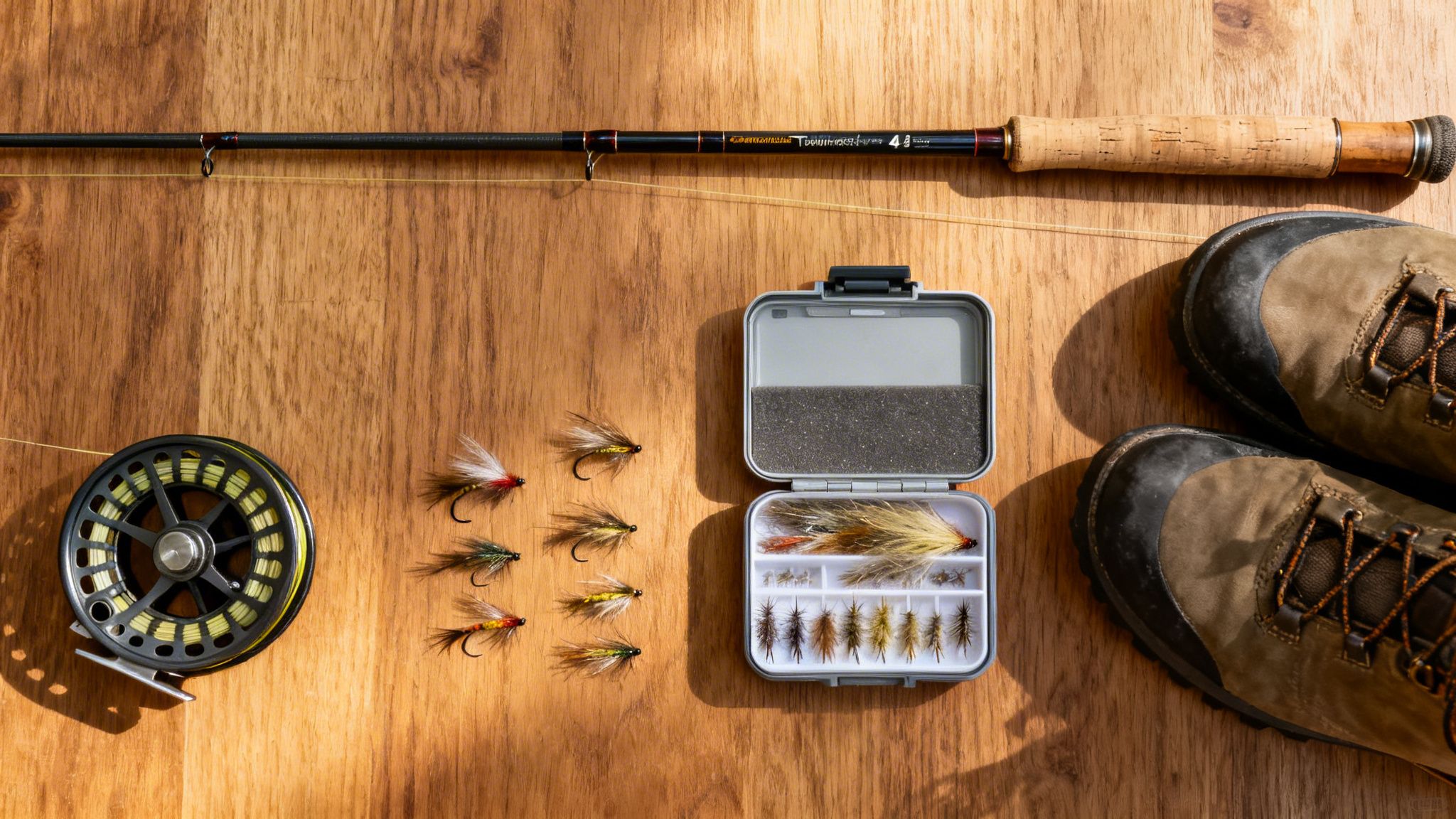
Walking up to a Tennessee river with the right gear can be the difference between a day of frustration and a day you’ll talk about for years. The state’s waters are incredibly diverse, from tight mountain streams full of wild brookies to massive tailwaters holding trophy browns. A one-size-fits-all approach just doesn’t cut it here.
Think of your fly rod as your most important tool. You wouldn’t bring a sledgehammer to do a screwdriver’s job, and the same logic applies here.
- For Small Mountain Streams: A lightweight 3- or 4-weight rod is your best friend. Something in the 7'6" to 8'6" range lets you make delicate, pinpoint casts to spooky trout without getting tangled in the rhododendron.
- For Larger Tailwaters: Step it up to a versatile 5- or 6-weight rod, typically 9' long. This gives you the backbone to cast further, manage your line in tricky currents, and handle the bigger fish you’ll find in rivers like the Clinch or South Holston.
Essential On-The-Water Apparel
Being comfortable and safe is just as important as what you’re casting. Staying dry and upright while wading through slick riverbeds is key to a good day.
Your wading setup is the foundation. On the hottest summer days, you might get away with wet wading in shorts and a good pair of boots, but for most of the year, breathable waders are a must. Pair them with quality wading boots that have sticky rubber or felt soles to keep you planted on those slippery rocks.
You’ll be doing a lot of walking, so don’t neglect your feet. A little extra support goes a long way, so it’s worth selecting insoles for hiking to keep you comfortable on the trail to and from the water. A good vest or pack is also non-negotiable for keeping your flies, leaders, and tools right where you need them.
Building Your Tennessee Fly Box
Rods and reels get all the glory, but your fly box is where the magic really happens. Fooling a smart Tennessee trout means offering them something that looks just like their natural food. Some patterns are so reliable on these waters they should be in every angler’s box.
The best anglers I know are also amateur bug nerds. Taking a moment to see what insects are hatching or crawling on the rocks will give you a massive advantage and tell you exactly what fly to tie on.
Having the right flies removes all the guesswork. This quick checklist covers the must-have patterns that will have you ready for almost any situation you'll find out there.
Your Tennessee Fly Box Checklist
| Fly Pattern Name | Fly Type (Dry, Nymph, Streamer) | Imitates | Best Used (Season Or Situation) |
|---|---|---|---|
| Parachute Adams | Dry Fly | Mayflies (general) | Year-round, especially during hatches |
| Elk Hair Caddis | Dry Fly | Caddisflies | Spring and Summer during caddis hatches |
| Pheasant Tail Nymph | Nymph | Mayfly Nymphs | Year-round for subsurface fishing |
| Zebra Midge | Nymph | Midge Larva | Winter and on tailwaters year-round |
| Woolly Bugger | Streamer | Baitfish, Leeches | Year-round, especially in high or off-color water |
With a well-stocked fly box and the right gear, you’re set up for a productive and enjoyable trip. To round out your mountain adventure, check out some of the other fantastic outdoor activities in Gatlinburg that you can enjoy when you’re not on the river.
The Ultimate Angler’s Retreat: Hemlock Hills Cabins
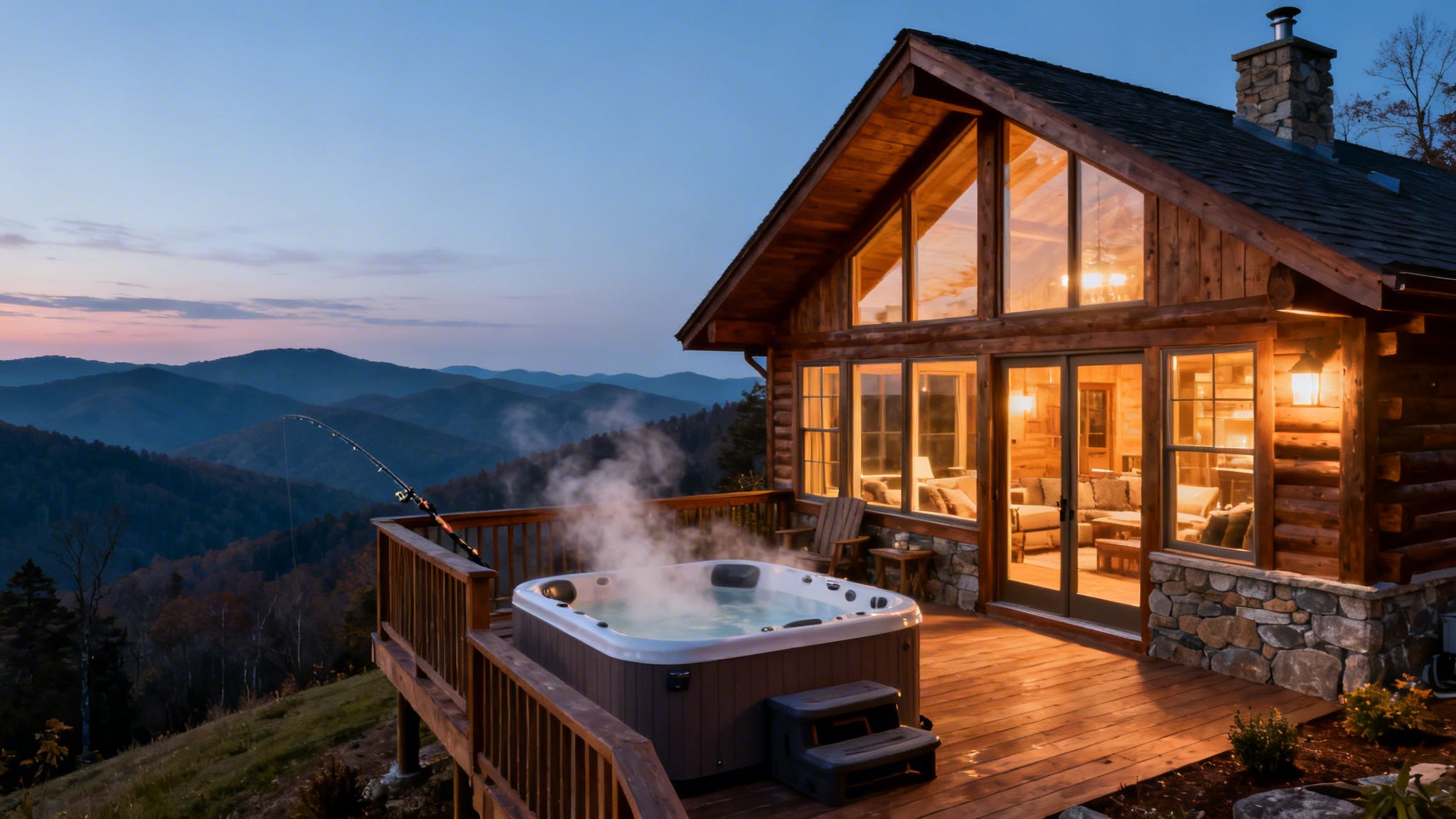
After a long day of wading a cold river, where you hang your waders to dry can make or break the whole trip. It's the difference between shivering in a sterile, cramped room and unwinding in your own private mountain oasis. For any angler visiting the Smokies, the hands-down choice for that perfect home base is Hemlock Hills Cabin Rentals.
These aren't just places to sleep; they’re your personal basecamp for adventure and the perfect spot to relax afterward. They have the practical space and amenities that anglers actually need, turning a good fishing trip into an unforgettable one.
More Than Just a Roof Over Your Head
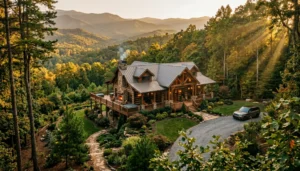
If you’re after a cabin that nails the combination of location, comfort, and real Smoky Mountain charm, Hemlock Hills is it. Just imagine having enough room to spread out, clean, and organize your rods, reels, and gear without tripping over everything. It’s a simple luxury that makes all the difference.
After a solid day on the water, you can fire up the grill or use the fully equipped kitchen to cook your catch (where local rules allow, of course). Even better, you can step out onto your private deck and sink into a steaming hot tub to soothe those tired muscles under the stars. It’s the perfect way to recover and get ready for another day of casting.
This level of comfort is exactly what makes Hemlock Hills Cabin Rentals the premier lodging for any fly fishing trip.
The Perfect Fit for Any Fishing Crew
Whether you're planning a solo trip to find some solitude, a romantic getaway with a fellow angler, or a big outing with your entire fishing crew, finding the right space is key. Hemlock Hills has an incredible selection of luxury log cabins, guaranteeing a perfect fit no matter the size of your group.
- 1–2 Bedroom Cabins: Just right for solo anglers or couples looking for a cozy retreat.
- 3–5+ Bedroom Cabins: Perfect for families and larger groups, often with awesome extras like game rooms and multiple decks so everyone can spread out.
Each cabin is perfectly positioned just minutes from top-tier water like the Little River, not to mention all the fun in Gatlinburg and Pigeon Forge. This prime location means less time driving and more time fishing.
🏡 Why Book Hemlock Hills Cabin Rentals?
✔ Prime Pigeon Forge & Gatlinburg locations
✔ Hot tubs, game rooms & luxury amenities
✔ Wide variety of cabin sizes (1–5+ bedrooms)
✔ Minutes from Dollywood & Smoky Mountain National Park
✔ Family, group & couple-friendly options
👉 View Cabins Here
A great fishing trip is about the whole experience—the thrill of the catch, the peace of the river, and the comfort of your retreat. Having a cabin that makes everything better is essential.
For your next fly fishing tennessee trip, don't just find a place to stay—find a basecamp that feels like home. With options for every group and amenities designed for pure relaxation, you can explore the full range of Smoky Mountain cabin rentals to find your perfect angler's haven.
Getting Legal: Licenses, Guides, and Local Rules
Before you even think about making that first cast into a gorgeous Tennessee river, it’s worth taking a few minutes to get the essentials handled. This little bit of prep work will make sure your trip is fun, successful, and most importantly, responsible.
Following the local rules isn't just about avoiding a ticket; it’s about showing respect for the incredible natural resources that make this place one of the best fly fishing destinations around.
First Things First: Your Tennessee Fishing License
Let's get this out of the way: you absolutely have to get a valid Tennessee fishing license. Thankfully, it's a piece of cake and you can do it online in just a few minutes.
The Tennessee Wildlife Resources Agency (TWRA) is who you'll go through. You can buy your license right on their website or even use their handy TWRA On The Go app.
- Resident or Not?: Just pick the license that fits you. They have options for all kinds of trips, from a single day on the water to a full year of fishing adventures.
- The Trout Stamp is Key: If you're here to chase trout (and let's be honest, most of us are), you must also buy a trout stamp. Think of it as an add-on to your main license.
Pro tip: Save a digital copy of your license to your phone and maybe keep a printed one in your glove box. It’s always better to have it and not need it.
Why a Local Guide is Your Secret Weapon
If you're new to the Smokies or just getting started with fly fishing, hiring a local guide is the single best investment you can make for your trip. A guide is your shortcut to success, plain and simple.
These folks spend hundreds of days a year on these exact rivers. They know the water flows, what bugs are hatching, and precisely where the fish are hiding. A good guide does more than just find fish for you; they teach you the specific tricks that work here, like the right nymphing rig for the Clinch or the perfect dry fly drift on the Little River. One day with an expert can teach you things that would take years to figure out on your own.
Knowing the Local Rules of the River
Fishing regulations are there for a reason—to keep the fish populations healthy so we can all enjoy them for years to come. The rules can change a lot from one river to the next, so always do a quick check before you head out.
"Always, always check the specific regulations for the water you plan to fish. The rules inside the Great Smoky Mountains National Park, for instance, are different from the state-run tailwaters. 'I didn't know' won't get you out of a fine."
Here are a few key things to look out for:
- Catch-and-Release: Many of Tennessee's prime trout streams are strictly catch-and-release. This means every trout goes right back into the water unharmed.
- Size & Creel Limits: In spots where you can keep fish, there will be strict rules on the minimum size and the maximum number (creel limit) you can take home in a day.
- Tackle Rules: Some special regulation areas might be limited to artificial lures or even single-hook flies only.
Your best bet is to always have the latest TWRA fishing guide handy. This smart approach ensures these amazing fisheries stay healthy and vibrant for the next generation of anglers.
Your Tennessee Fly Fishing Questions Answered
We get a lot of questions from folks planning a fly fishing trip to the Smokies. It's completely understandable—you want to get it right! To help you finalize your plans and feel ready to hit the water, we've put together answers to some of the most common questions we hear.
What Is The Best Time Of Year For Fly Fishing In Tennessee?
If you ask ten different anglers, you might get ten different answers, but most will agree that spring and fall are just magical. Spring (March through May) is when the mountains truly wake up. Warmer water temps kick off some massive insect hatches, and that gets the fish looking up and feeding aggressively on the surface.
Then there's fall (September through November). The air is crisp, the fall colors are breathtaking, and the trout are dressed in their absolute best spawning colors. It's hard to beat. That said, thanks to our incredible tailwater rivers like the South Holston and Clinch, you can find fantastic fishing any day of the year. The consistent cold water released from the dams keeps the trout happy and active, even in the heat of summer or the cold of winter.
Do I Need A Special License For Trout Fishing?
Yes, you sure do. On top of a standard Tennessee fishing license, you'll need to purchase a separate trout stamp if you plan to fish for trout or cast a line in any designated trout waters.
The good news is that it's super simple. You can buy both the standard license and the required trout stamp at the same time right from your phone or computer. Just head over to the official Tennessee Wildlife Resources Agency (TWRA) website or use their mobile app.
Are There Good Fly Fishing Spots For Beginners Near Gatlinburg?
Absolutely! Gatlinburg is the perfect base camp for new anglers. The Little River, which runs right through the Great Smoky Mountains National Park, is a fantastic spot to learn the ropes. The access is about as easy as it gets—you can pull off along Little River Road and be on the water in minutes.
The river is also full of wild rainbow trout that are often more than willing to forgive a cast that isn't quite perfect. For a real head start, think about hiring a local guide for a half-day trip. They’ll provide all the gear, teach you the basics, and share their local knowledge to help you land that memorable first trout on a fly.
Can I Keep The Trout I Catch In The Smoky Mountains?
This is a really important question, and the answer depends entirely on where you are. Regulations can change from one stream to the next, so it’s crucial to know the rules for the specific water you're fishing before you make your first cast. Many streams inside the Great Smoky Mountains National Park do allow you to keep fish, but they have very specific size limits and daily creel limits (the number you can keep).
On the other hand, many of the premier tailwaters and special regulation areas are strictly catch-and-release only for trout. This is to protect the health and quality of these world-class fisheries. Always check the current TWRA regulations for the specific body of water you plan to fish.
Whether you’re planning a family getaway, a couples’ retreat, or a Smoky Mountain adventure with friends, Hemlock Hills Cabin Rentals delivers comfort, location, and unforgettable cabin experiences. With options for every group size, it’s one of the best ways to enjoy Pigeon Forge and Gatlinburg.
👉 Explore cabins here