
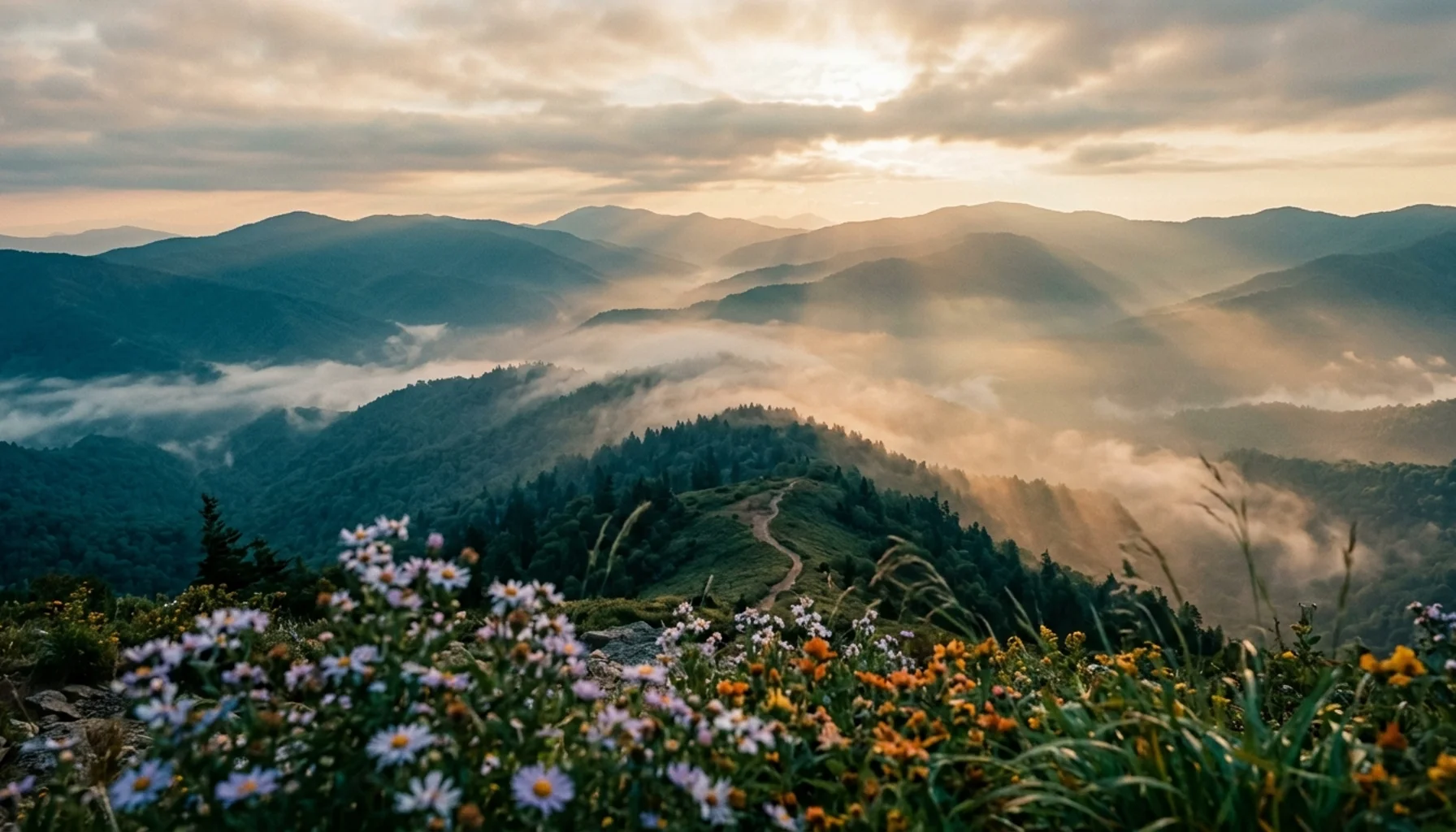
Great Smoky Mountains National Park is a 522,419-acre protected wilderness straddling the Tennessee and North Carolina border, and it holds the title of the most visited national park in the United States, drawing 12,191,834 visitors in 2026 according to National Park Service data. Entry is free, the scenery is extraordinary, and the biodiversity rivals anywhere in North America.
- Great Smoky Mountains National Park covers 522,419 acres across Tennessee and North Carolina and received over 12 million visitors in 2026, making it the most visited US national park.
- The park is free to enter, but parking tags are required for any stay longer than 15 minutes and are available as daily, weekly, or annual passes.
- Kuwohi (formerly Clingmans Dome) is the park’s highest point at 6,643 feet; the park contains 16 peaks exceeding 6,000 feet.
- July and October are the busiest months; late May to early June offers the synchronous firefly viewing lottery at Elkmont, one of the rarest natural events in North America.
- The park harbors over 22,000 documented life forms including black bears, elk, synchronous fireflies, and the hellbender salamander.
- Cabins in Sevierville, Gatlinburg, and Pigeon Forge put you within minutes of the park’s main entrances along US Highway 441.
- The park is the most visited in the US, covering 522,419 acres across the TN/NC border, with no admission fee.
- Parking tags are mandatory for stays over 15 minutes; buy daily ($5), weekly ($15), or annual ($40) passes online or at kiosks.
- Top trails include Alum Cave Trail (10 mi round-trip to Mount Le Conte), Charlies Bunion (8 mi), and Abrams Falls (5 mi).
- Best wildlife viewing: black bears in Cades Cove, elk in Cataloochee Valley, synchronous fireflies at Elkmont in late May.
- The mysterious blue haze the mountains are named for comes from volatile organic compounds released by the trees themselves.
- Sevierville, Gatlinburg, and Pigeon Forge cabin rentals serve as ideal base camps for multi-day park exploration.
Planning a trip to Great Smoky Mountains National Park in 2026 means navigating one of the most popular natural destinations in the world. The good news: the park rewards preparation. Visitors who understand the seasonal rhythms, know which trails to prioritize, and have a comfortable base camp nearby consistently report better experiences than those who show up without a plan. This guide covers the park’s geography, signature experiences, practical logistics, and a few things most visitors never think to ask.
Tourism in this region has grown substantially. According to the Tennessee Department of Tourist Development, visitors to Sevier County generated nearly $3.93 billion in total visitor spending in 2026, a 2.03% increase over 2023, and Tennessee’s statewide tourism broke records for the fourth consecutive year. Understanding that context matters: this region is popular because it genuinely delivers. But popularity brings crowds, and knowing when and where to go changes everything.
What City Is the Smoky Mountains National Park In?
Great Smoky Mountains National Park does not belong to any single city. The park straddles the Tennessee and North Carolina state border, with its primary Tennessee entrance located along US Highway 441 in Gatlinburg, Tennessee, and its primary North Carolina entrance near Cherokee, North Carolina. The park headquarters is located at 107 Park Headquarters Road, Gatlinburg, TN 37738.
On the Tennessee side, the park borders Blount, Sevier, and Cocke Counties. Gatlinburg is the closest town to the Sugarlands Visitor Center, which serves as the park’s main orientation hub. Pigeon Forge and Sevierville sit just north of Gatlinburg along the US 441 corridor, putting them roughly 20 to 30 minutes from the park entrance depending on traffic.
On the North Carolina side, the town of Cherokee borders the Oconaluftee area of the park, adjacent to the Eastern Band of Cherokee Indians reservation. The town of Bryson City, NC, provides access to the park’s quieter southern sections, including Deep Creek, which is well known for its waterfall-lined tubing runs in summer.
Townsend, Tennessee, offers a third and often overlooked entrance on the western side of the park, providing access to Cades Cove without the traffic of the Gatlinburg corridor. For visitors staying in Sevierville cabins, this western approach adds roughly 30 to 40 minutes but completely sidesteps the congestion on US 441 during peak season.
Can You Just Drive Through Smoky Mountain National Park?
Yes, you can drive through Great Smoky Mountains National Park, and Newfound Gap Road (US Highway 441) is the primary route, running 31 miles from Gatlinburg, Tennessee, to Cherokee, North Carolina. This is the only paved road that crosses the full width of the park, passing through the high elevation Newfound Gap at 5,046 feet with panoramic views in both directions.
Driving Newfound Gap Road takes roughly 60 to 90 minutes without stops, but most visitors stop frequently. The road passes the Rockefeller Memorial, the Mingus Mill historic grist mill on the North Carolina side, and several overlooks with long-range ridge views. On clear mornings, the light hitting the ridgeline from Newfound Gap is genuinely arresting. In October, the same stretch turns gold and crimson and draws enormous crowds.
Cades Cove Loop Road is the park’s second major drive, an 11-mile one-way loop through an open valley on the western side. This is the best spot in the park for wildlife viewing: black bears, white-tailed deer, and wild turkey are regularly sighted from the road. The loop is only open to vehicles on certain days and closes Wednesday and Saturday mornings to allow pedestrians and cyclists priority access, so check the NPS congestion calendar and traffic tips before you go.
The Foothills Parkway runs along the park’s northern edge in Tennessee and offers ridge-top driving with panoramic valley views without the congestion of the main corridors. The Look Rock area, accessible from the western section of the Foothills Parkway, has a half-mile paved trail to a tower with 360-degree views. Few visitors know about it. That makes it worth the detour.
Guests staying at Smoky Mountain Serenity Lodge in Sevierville are approximately 10 minutes from the park entrance, making early morning departures practical before the Newfound Gap Road fills with day-trippers.
What Is the Main Attraction in Smoky Mountain National Park?
The main attraction of Great Smoky Mountains National Park is its extraordinary biodiversity, expressed through old-growth forests, cascading waterfalls, and abundant wildlife found nowhere else in such concentration. The park earned its UNESCO World Heritage Site designation in 1983 and its International Biosphere Reserve status in 1988 specifically because of its biological significance, harboring over 22,000 documented life forms.
For most visitors, the answer is more specific: Cades Cove, Kuwohi (formerly Clingmans Dome), and the hiking trail network are the three draws that pull the largest crowds.
Kuwohi: The Park’s Highest Point
Kuwohi, the Cherokee name meaning “mulberry place” that was officially restored to replace “Clingmans Dome” in recent years, reaches 6,643 feet, making it the highest point in Tennessee and the third-highest mountain east of the Mississippi River. A paved but steep half-mile trail climbs from the parking area to an observation tower with views that, on clear days, stretch into multiple states. The summit road is typically closed from December through March due to winter conditions. Check the official Kuwohi visitor information page for current access status before making the drive.
Cades Cove: The Wildlife Epicenter
Cades Cove is an open valley surrounded by forested ridges, and it functions as the park’s most reliable wildlife viewing site. Black bears appear here regularly throughout spring, summer, and fall. White-tailed deer are present year-round. The Cable Mill Historic Area and several preserved homesteads tell the story of the European settlers who farmed this valley before the park’s establishment in 1934. The official Cades Cove visitor information page lists current loop road schedules and closures.
Synchronous Fireflies: The Lottery Experience
Each year in late May to early June, the Elkmont area hosts one of North America’s rarest natural events: the synchronous firefly display, where thousands of Photinus carolinus fireflies flash in coordinated patterns. A lottery system managed by the National Park Service selects visitors for a shuttle pass to the Elkmont viewing area. The synchronous firefly NPS page publishes lottery dates each spring. Apply early. This experience books out within minutes of the lottery opening.
What Not to Miss in Smoky Mountains National Park?
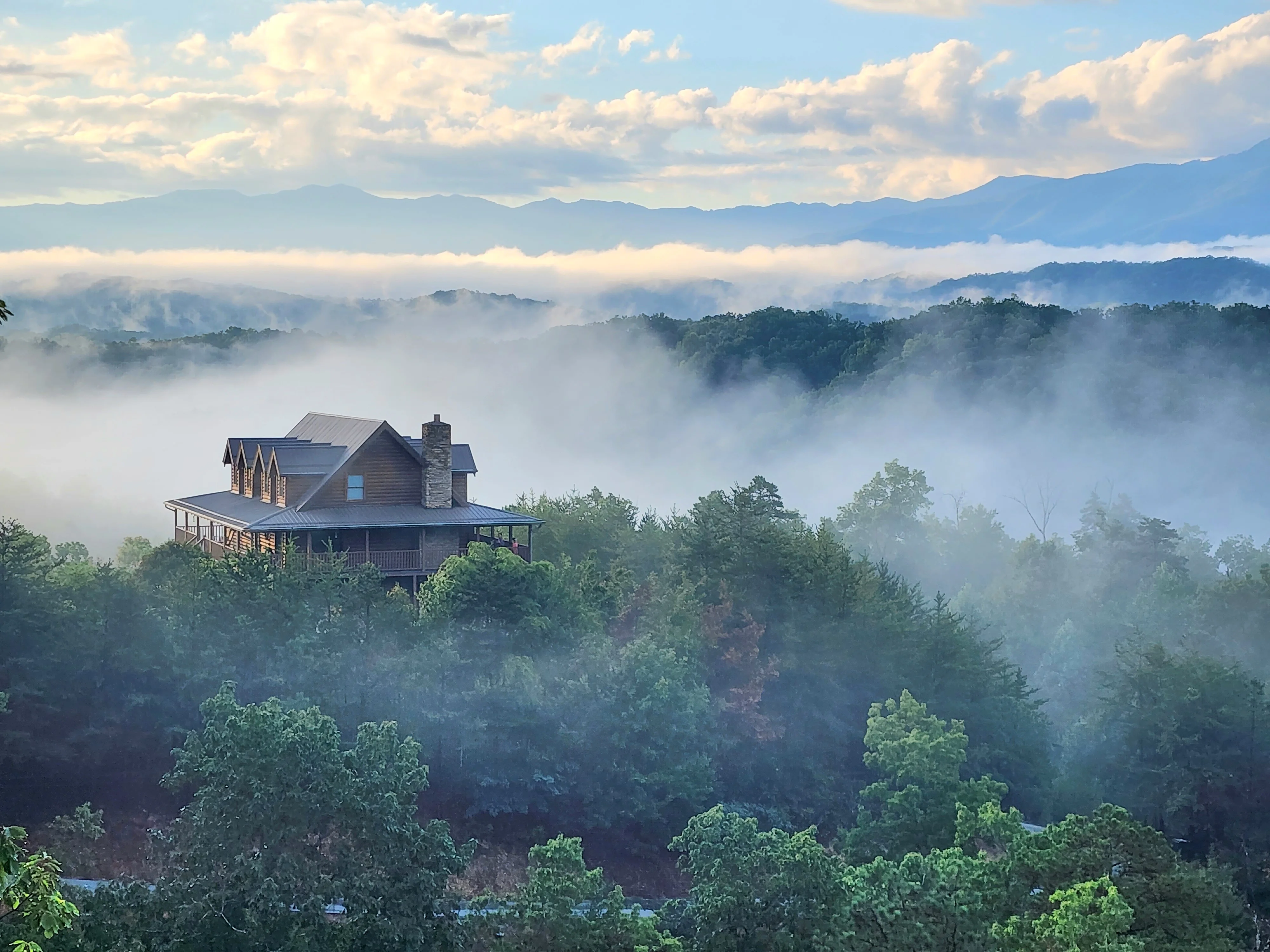
The experiences most worth prioritizing in Great Smoky Mountains National Park are the ones that require either early morning timing, advance planning, or both. The park’s most spectacular moments, from fog-draped ridge views to black bear sightings, consistently reward visitors who arrive before 9 AM and leave the main corridor.
Top Hiking Trails by Experience Level
| Trail | Distance (Round Trip) | Difficulty | Highlights |
|---|---|---|---|
| Alum Cave Trail to Mount Le Conte | 10 miles | Strenuous | Arch Rock, Alum Cave Bluffs, 6,593 ft summit views |
| Charlies Bunion | 8 miles | Strenuous | Rocky outcropping, Appalachian Trail, panoramic views |
| Abrams Falls | 5 miles | Moderate | 40-foot waterfall, Cades Cove access, stream crossings |
| Rainbow Falls | 5.4 miles | Moderate | Tallest single-drop waterfall (80 ft) in the park |
| Big Creek Trail | 4 miles | Easy to Moderate | Midnight Hole, Mouse Creek Falls (45 ft) |
| Sugarlands Valley Nature Trail | 0.5 miles | Easy (ADA paved) | Hardwood forest, wheelchair accessible |
| Gatlinburg Trail | 1.9 miles | Easy (flat, paved) | Middle Prong of Little Pigeon River, pet-friendly |
The Mount Le Conte via Alum Cave Trail is the park’s signature hike. It earns that status. The Alum Cave Bluffs section, roughly two miles in, passes under a 100-foot concave cliff face where water seeps constantly. The final approach to the summit involves some hand-over-hand scrambling on cables. It is worth every step.
For a waterfall hike without the elevation gain, Abrams Falls in Cades Cove delivers a dramatic payoff. The falls drop 20 feet into a wide pool surrounded by rhododendron. The trail is mostly shaded and follows Abrams Creek for most of its length. Start early; the parking area at the Cades Cove picnic area fills by 8 AM on summer weekends.
Guests at The Spirit Bear in Gatlinburg’s Arts and Crafts Community are just 5 minutes from the Sugarlands Visitor Center, making it realistic to reach the Alum Cave trailhead before the parking lot reaches capacity on busy mornings.
Wildlife Viewing Beyond Cades Cove
Elk were reintroduced to the park in 2001 after an absence of more than 150 years. The best place to see them is Cataloochee Valley on the North Carolina side, a remote valley accessible via a narrow mountain road that requires patience but pays off handsomely at dusk when the herd moves into the open meadow. The Cataloochee Valley visitor information page has current herd activity notes.
The Oconaluftee Valley near the Cherokee, NC, entrance also hosts a small elk herd and is considerably easier to reach than Cataloochee. Many visitors overlook it entirely because it sits on the less-trafficked North Carolina side of the park.
Why Do the Smoky Mountains Look Smoky? The Science Behind the Name
The blue haze that gives Great Smoky Mountains National Park its name is a natural atmospheric phenomenon caused by volatile organic compounds (VOCs) released by the park’s dense vegetation. Specifically, the trees, primarily oaks, pines, and various broadleaf species, emit isoprene and terpenes as part of their metabolic processes. These compounds react with sunlight and other atmospheric molecules to form tiny particles that scatter light, producing the characteristic blue-gray haze that layers across the ridges.
This is distinct from pollution, though air quality in the region can be affected by regional ozone and particulates during summer months, particularly when winds carry industrial emissions from the Ohio Valley. The park’s elevation and its position within a natural bowl of ridges can trap these pollutants. On hazy summer days, visibility at the higher overlooks may be reduced compared to crisp fall or winter mornings.
According to research supported by Discover Life in America, the park’s biodiversity research non-profit, the density and variety of the tree canopy here is itself exceptional. The park’s position at the convergence of southern Appalachian ecosystems that survived the last ice age as a refugium means this forest is among the most botanically diverse temperate forests in the world. That same vegetative density is what produces the haze most visitors find so visually compelling.
Will Kuhn, Director of Science and Research at Discover Life in America, has noted that visitors who look upward into the canopy layers often encounter the park’s biodiversity most directly: mosses, lichens, and epiphytes growing on branches 60 feet overhead that represent entirely separate micro-ecosystems from the forest floor.
What Are the Parking Tag Requirements and Costs?
Great Smoky Mountains National Park requires a parking tag for any vehicle parked for more than 15 minutes at trailheads, overlooks, and developed areas. As of 2026, the National Park Service enforces this policy park-wide. Tags are available as daily passes ($5), weekly passes ($15), or annual passes ($40) and can be purchased online through Recreation.gov, at the four visitor centers, or at self-service kiosks near popular trailheads.
The parking tag requirement replaced traditional fee-booth collection and was introduced to address the chronic congestion that plagued the park’s most popular access points. Before the system existed, overflow parking on road shoulders created genuine safety hazards on narrow mountain roads.
Practically speaking, the trailheads most impacted by parking shortages are Alum Cave (busy by 7 AM on summer weekends), Laurel Falls (the most popular waterfall trail in the park, consistently packed), and the Cades Cove picnic area. The Clingmans Dome/Kuwohi parking area at the end of the 7-mile spur road fills early and may require a wait for a spot during July and October.
Annual America the Beautiful passes (federal interagency passes) cover parking tags in the Smokies and are worth considering for anyone visiting multiple national parks or planning more than three or four separate Smoky Mountain day trips per year. The pass costs $80 and covers the annual parking tag fee for the duration of its validity.
One detail most visitors miss: parking kiosks at some trailheads are credit-card only. Bring a card. Cash will not work at the automated kiosks, though visitor center staff can process cash transactions.
What Camping and Lodging Options Exist Inside the Park?
Great Smoky Mountains National Park contains 10 developed frontcountry campgrounds and 5 drive-in horse camps, plus an extensive backcountry camping network accessible by permit. The only permanent in-park lodging is LeConte Lodge, a collection of rustic cabins and hiker shelters perched at 6,593 feet on the summit of Mount Le Conte. Reaching it requires hiking 5 to 9 miles depending on the trail chosen, and reservations typically open in October for the following year and sell out quickly.
LeConte Lodge is the highest guest accommodation in the eastern United States. Meals are included, the views from the summit at sunrise are among the finest in the Appalachians, and no roads reach it. Everything, including food and supplies, arrives by llama train. It is a genuinely unusual experience.
Backcountry Camping in the Park
Backcountry camping is available at designated shelters and campsites throughout the park’s trail network. All backcountry campers must have a permit, which can be reserved online through the Recreation.gov system or obtained at visitor centers. Permits are $4 per person per night as of the most recent fee schedule. Sites and shelters are assigned at specific locations; dispersed camping is not permitted.
The most popular backcountry routes include the AT shelter chain from Newfound Gap south toward Fontana Lake, and the Smoky Mountains High Country loop connecting Charlies Bunion, Mount Guyot (the park’s second-highest peak at 6,621 feet), and the Cosby area. Backcountry use is significantly lower than frontcountry visitation, meaning permit availability is usually good outside of the May through October peak window.
For families who want the national park experience without tent camping, Pigeon Forge cabin rentals sit 10 to 20 minutes from park entrances and offer every home comfort alongside mountain proximity. The Forest Creek Retreat, for example, puts guests within about 12 minutes of the park entrance while providing a private hot tub, fire pit, and creekside setting that genuinely extends the outdoor experience beyond the trail.
What Accessibility Options Does the Park Offer?
Great Smoky Mountains National Park offers several accessible experiences designed for visitors with mobility limitations. The Sugarlands Valley Nature Trail, a half-mile paved, flat loop near the Sugarlands Visitor Center, is fully ADA-accessible and passes through a mature hardwood forest with interpretive signage. The Gatlinburg Trail, a 1.9-mile flat paved path following the Middle Prong of the Little Pigeon River, is also accessible and is one of the few park trails where leashed pets are permitted.
Off-road wheelchairs are available for complimentary reservation through the Sugarlands Visitor Center, allowing visitors with mobility challenges to access unpaved sections of the park independently. These devices require advance reservation; call (865) 436-1200 to arrange.
The Oconaluftee Visitor Center on the North Carolina side and the Cades Cove Visitor Center both have accessible facilities, and the Cades Cove Loop Road can be driven by any vehicle, making wildlife viewing from a car a fully accessible option. Accessible restrooms are available at all four main visitor centers: Sugarlands (Gatlinburg, TN), Oconaluftee (Cherokee, NC), Cades Cove, and the Clingmans Dome/Kuwohi area.
One practical note: the Kuwohi observation tower trail, though paved, has a sustained grade that is challenging for most manual wheelchairs. Power wheelchairs and mobility scooters handle it better. The view from the lower parking area is still significant and requires no additional climbing.
What About Fishing in the Park?
Great Smoky Mountains National Park is one of the finest trout fishing destinations in the eastern United States. The park contains an estimated 2,900 miles of streams, and roughly 700 miles of those support wild trout populations, primarily brook trout (the only trout native to the southern Appalachians), rainbow trout, and brown trout.
A Tennessee or North Carolina fishing license is required depending on which side of the park you fish, and the park’s own regulations layer on top of state rules. Key park-specific rules include: single-hook artificial lures only on most streams (no live bait), catch-and-release only on many streams designated as wild brook trout habitat, and a daily creel limit of 5 trout (combined species) where harvest is permitted.
The best fishing streams in the Tennessee portion of the park include Little River (accessible along Little River Road from Townsend), Abrams Creek in Cades Cove, and the upper reaches of Ramsey Prong near the Greenbrier area. For the North Carolina side, Hazel Creek (accessible only by boat across Fontana Lake) is considered by many serious anglers to be the best wild trout stream in the Southeast. It sees a fraction of the fishing pressure of the Tennessee streams simply due to access difficulty.
A Tennessee fishing license can be purchased online through the Tennessee Wildlife Resources Agency (TWRA) website before your trip. North Carolina licenses are available through the North Carolina Wildlife Resources Commission. Neither license is sold at park visitor centers, so plan ahead.
How Do You Plan a Day Trip vs. a Multi-Day Visit?
Planning a Great Smoky Mountains visit effectively means deciding upfront whether you want breadth or depth. A single day allows time for one major hike plus a scenic drive. Three to five days allows you to explore the Tennessee and North Carolina sides, include a sunrise summit attempt at Kuwohi, do wildlife watching at both Cades Cove and Cataloochee, and fish a morning stretch of stream without feeling rushed.
Day Trip Priority List
- Arrive at your chosen trailhead before 8 AM to secure parking without a wait.
- Complete your hike before noon, when afternoon thunderstorms are most likely in summer months.
- Drive Newfound Gap Road in the afternoon when the ridgeline views are typically clearer than early morning fog.
- Pick up your parking tag before you leave home using Recreation.gov to avoid kiosk lines on arrival.
Multi-Day Itinerary Framework
- Day 1: Sugarlands Visitor Center orientation, Laurel Falls, Newfound Gap Road drive to summit overlook.
- Day 2: Cades Cove loop (arrive at 7 AM for wildlife), Abrams Falls hike, Cable Mill Historic Area.
- Day 3: Alum Cave Trail to Mount Le Conte (full day), sunset from the summit.
- Day 4: Cross into North Carolina via Newfound Gap, Oconaluftee Valley elk viewing, Mingus Mill, Mountain Farm Museum.
- Day 5: Cataloochee Valley (North Carolina), Big Creek Trail, return via I-40.
A cabin in Sevierville, Pigeon Forge, or Gatlinburg makes this framework practical. The Can’t Bear To Leave cabin sits 8 minutes from the park entrance and 10 minutes to Pigeon Forge, which means you can return to a private indoor heated pool and hot tub after a strenuous day on the trails without a long drive. That combination of trail access and recovery amenities makes a real difference across a five-day visit.
For larger groups planning multi-day park exploration, the Views Fore Days cabin accommodates up to 16 guests and includes a home theater for evenings when legs are too tired for another walk, plus an indoor heated pool and game room that keep everyone entertained regardless of the next day’s weather forecast.
Frequently Asked Questions About Great Smoky Mountains National Park
Is there an admission fee for Great Smoky Mountains National Park?
Great Smoky Mountains National Park has no admission fee and is one of the few major national parks in the US that remains free to enter. However, parking tags are required for stays longer than 15 minutes. Daily passes cost $5, weekly passes cost $15, and annual passes cost $40. America the Beautiful federal interagency passes also cover parking tags in the park.
When is the best time to visit Great Smoky Mountains National Park?
The best time to visit depends on what you want to experience. Spring (March through May) brings wildflower blooms, fewer crowds, and the synchronous firefly lottery in late May to early June. Fall (mid-October) offers peak foliage but the heaviest crowds of the year. Winter provides solitude, snow, and clear views, though the Kuwohi summit road closes and some campgrounds shut down. Summer is peak season with the largest crowds and highest temperatures at lower elevations, though upper elevations stay relatively cool.
Are pets allowed in Great Smoky Mountains National Park?
Pets are permitted in campgrounds, picnic areas, and along roadways, but they are restricted from nearly all hiking trails. The two exceptions are the Gatlinburg Trail (Tennessee side) and the Oconaluftee River Trail (North Carolina side), both of which allow leashed pets. Leashed service animals are permitted on all trails. Because most trails are off-limits to pets, travelers with dogs often find that staying in a pet-friendly cabin near the park gives their animals the outdoor time they need between visits to the accessible trails.
What is the highest peak in Great Smoky Mountains National Park?
Kuwohi, formerly known as Clingmans Dome, is the highest peak in the park at 6,643 feet (2,025 m). It is also the highest point in Tennessee and the third-highest mountain east of the Mississippi River. The Cherokee name Kuwohi means “mulberry place” and was officially restored in recent years. A steep half-mile paved trail leads from the parking area to an observation tower. The summit road closes seasonally, typically from December through March.
What is the best trail for beginners in the Smoky Mountains?
The Sugarlands Valley Nature Trail is the best starting point for first-time visitors and those with limited mobility: it is a fully paved, ADA-accessible half-mile loop through a mature hardwood forest near the Sugarlands Visitor Center. For beginners who want a waterfall experience, the Fighting Creek Nature Trail (1 mile, easy) leads to Cataract Falls, which drops 40 feet. The Gatlinburg Trail (1.9 miles, flat) follows the Little Pigeon River and allows pets, making it a strong choice for families and dog owners.
Do you need reservations to visit Great Smoky Mountains National Park?
No general reservation is required to visit the park, but specific experiences do require advance planning. Campground reservations are strongly recommended for summer and fall visits and can be made through Recreation.gov. The synchronous firefly viewing at Elkmont (late May to early June) requires a lottery shuttle pass. Backcountry camping requires a permit ($4 per person per night) reserved in advance. LeConte Lodge reservations typically open in October for the following year and sell out quickly. Parking tags can and should be purchased online before your visit to avoid kiosk lines.
What wildlife can you see in Great Smoky Mountains National Park?
The park harbors over 22,000 documented life forms, including approximately 1,900 flowering plant species and 200 vertebrate animal species. Commonly sighted wildlife includes black bears (the park supports a population of roughly 1,500), white-tailed deer, wild turkey, red and gray foxes, and river otters. Elk were reintroduced in 2001 and are reliably seen in Cataloochee Valley (NC) and the Oconaluftee Valley area. The hellbender salamander, which can reach 2.5 feet in length, lives in cold, clear mountain streams and is one of the park’s more remarkable rarities.
How far is the Smoky Mountains from Knoxville, Tennessee?
The main park entrance at Gatlinburg, Tennessee, is approximately 40 to 45 miles from downtown Knoxville, typically a 50 to 60 minute drive depending on traffic. McGhee Tyson Airport (Knoxville) is the closest major commercial airport to the park, located roughly 42 miles from the Gatlinburg entrance. Asheville Regional Airport in North Carolina offers a similar distance from the park’s southern entrances near Cherokee, NC.
Planning Your Visit: The Information You Need Before You Go
Great Smoky Mountains National Park rewards preparation. The four main visitor centers operate year-round: Sugarlands near Gatlinburg (the busiest, with the most comprehensive exhibits), Oconaluftee near Cherokee NC, Cades Cove on the western loop, and the small Clingmans Dome/Kuwohi facility at the summit area (seasonal). Pick up trail maps, current condition reports, and wildlife activity updates at any of them before heading deeper into the park. The official visitor center page lists current hours.
Cell service is limited or nonexistent throughout most of the park’s interior. Download offline maps, trail guides, and weather forecasts before you leave your accommodation. The NPS app allows offline access to trail maps and facility information. Weather changes rapidly at higher elevations; afternoon thunderstorms are common from June through August, and temperatures at the Kuwohi summit average a daily maximum of only 75.6°F in July despite the summer heat in the valleys below.
For comprehensive trip planning before you finalize your dates and accommodation, the Smoky Mountain Vacation Planner provides a solid framework for building an itinerary across the different regions of the park and surrounding towns.
The park’s mailing address is 107 Park Headquarters Road, Gatlinburg, TN 37738; the main information line is (865) 436-1200. Ranger programs and interpretive events, offered free at visitor centers and campground amphitheaters throughout the year, are among the most underused resources in the park. Check the schedule at the visitor centers upon arrival.
Where Should You Stay for the Best Smoky Mountains Access?
Choosing where to stay significantly affects how much of Great Smoky Mountains National Park you can experience in a given trip. Gatlinburg offers the closest proximity to the Sugarlands entrance. Pigeon Forge and Sevierville are 15 to 25 minutes further but typically offer more space per dollar and easier parking for larger groups.
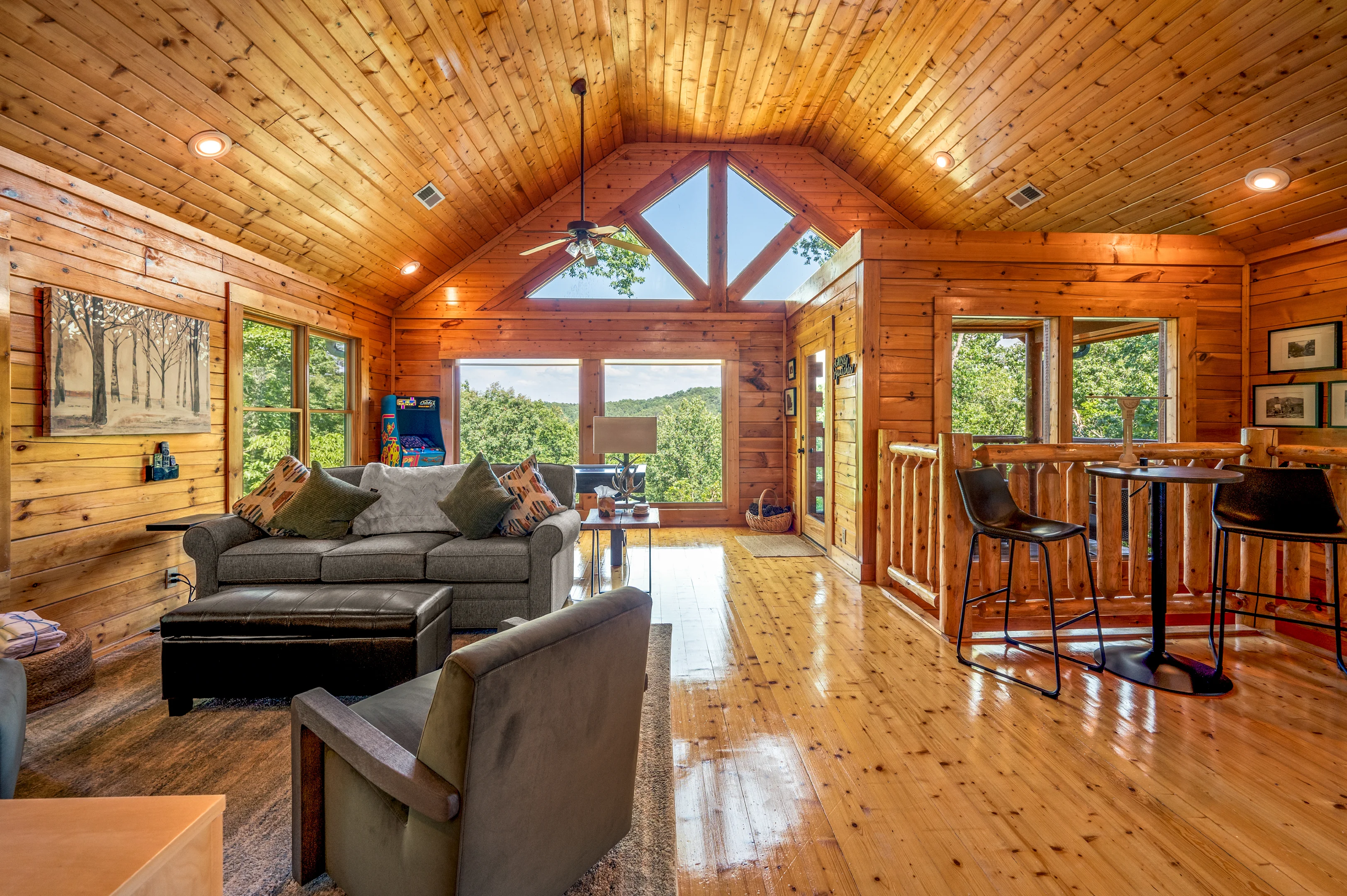
For couples prioritizing park access alongside genuine comfort, Gatlinburg Enchantment is a three-bedroom log cabin in the Hemlock Hills Resort community, walking distance to the Gatlinburg Arts and Crafts Community and about 15 minutes from the park entrance. Classic log construction, vaulted ceilings, and a private hot tub deck make evenings after a long hike considerably more pleasant.
Families who need more room and amenities will find the three-bedroom Bear View cabin worth serious consideration. It accommodates up to 12 guests, is pet-friendly with a zero-step main entrance (a genuine practical advantage when arriving with gear and children), and features a pool table, air hockey, and multicade arcade for the inevitable rainy afternoon. The park entrance is about 18 minutes away.
For larger groups, Heaven’s Porch sleeps 16 across five bedrooms, includes a 50-game multicade, home theater, and hot tub, and sits 15 minutes from the park. That combination of capacity, entertainment, and location is genuinely hard to find at a single property anywhere in the region.
If you want to use the park’s North Carolina side, including Cataloochee Valley for elk viewing and the quieter southern trail networks, plan on a drive of 60 to 90 minutes from Gatlinburg or Pigeon Forge across Newfound Gap. That route is scenic but takes time; most visitors based in Tennessee only make the cross-park drive once or twice per stay.
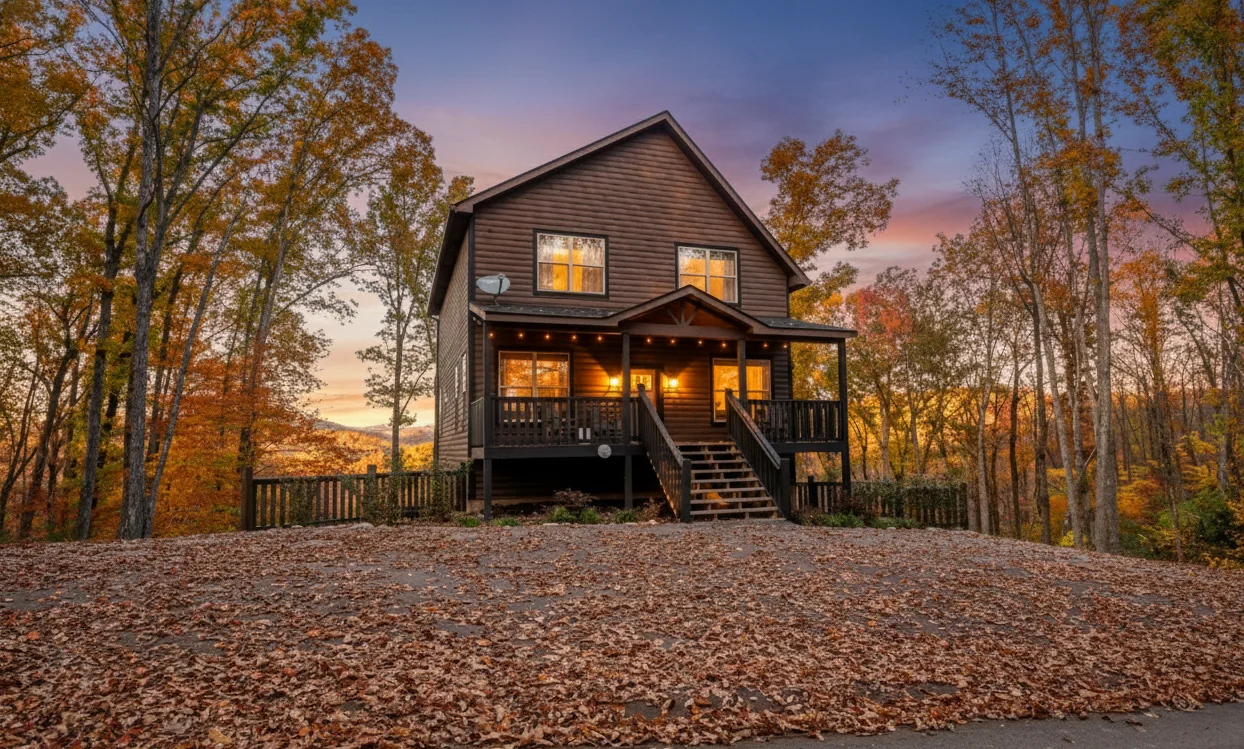
In 2026, the Smokies region continues to see strong visitor demand. According to data from the Tennessee Department of Tourist Development, Tennessee’s statewide tourism hit records for the fourth consecutive year in 2026, and Sevier County alone generated nearly $3.93 billion in visitor spending. Booking your accommodation several months in advance, particularly for fall foliage season (mid-October) and summer holiday weekends, is increasingly necessary rather than merely advisable.
Whether you hike to Charlies Bunion for the ridgeline views, drive Cades Cove at dawn for the wildlife, or simply pull off at a Newfound Gap overlook to watch the fog move through the valleys below, Great Smoky Mountains National Park delivers experiences that are genuinely difficult to find anywhere else. The park is free, the access is straightforward, and the scale of what is preserved here, more than 22,000 species across 522,419 acres recognized as a UNESCO World Heritage Site, is worth understanding before you arrive. Come prepared, come early, and the Smokies will exceed almost every expectation.
When you are ready to plan your base camp for a park visit, browse the full selection of Hemlock Hills Cabin Rentals properties across Gatlinburg, Pigeon Forge, and Sevierville to find the right size and location for your group.